Sunday, October 09, 2005

A Visit With Adam Henein

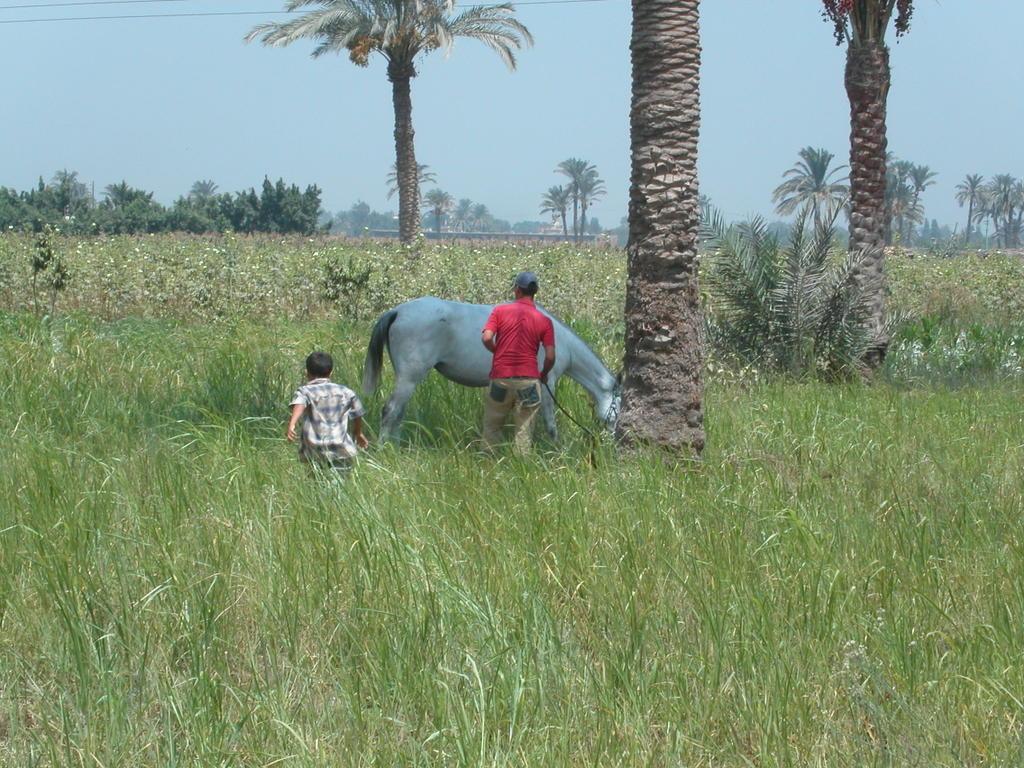
A week ago on Saturday my favourite riding partners opted to go on an exploration with me to see if we could find our way from the paddocks to the Wissa Wassef Museum. According to Google Earth, the route was very straigthforward, simply an extension of a route that we had explored before. So we ventured forth on the horses to find our way to the weaving center. That day was still hot, too hot to be riding in the desert, but in the farmland we had trees for shade and our trail took us into the wind blowing from the north. My village neighbours were working hard on the harvesting of zucchini squash from the fields near the paddocks, in preparation for Ramadan which would start a few days later. For some odd reason, the month of fasting is a major food-buying time, as Egyptians do a huge amount of socialising during Ramadan. Invitations fly to friends and familes to join for the breaking of the fast each night, resulting in something almost like a month long celebration of Christmas.

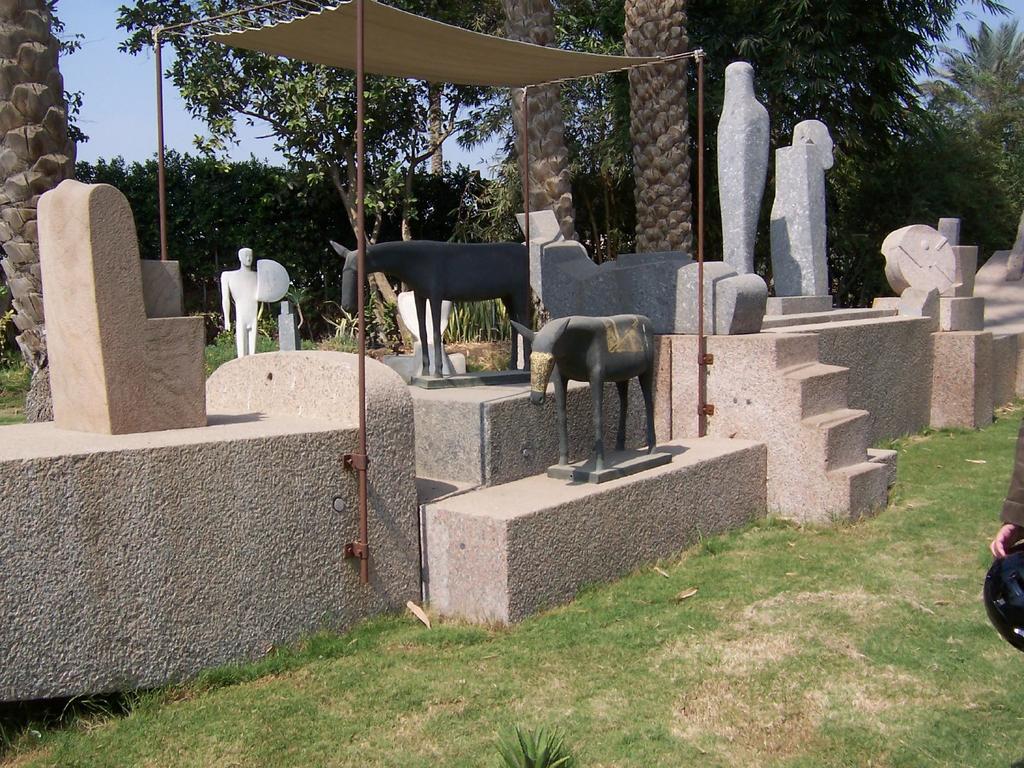
After a longish trek along canals, marking our progress by the restaurants and villas that we recognised on the other bank of the canal running parallel to the main road, we found ourselves outside the museum. We rode the horses in, to the astonishment of the doorman, explaining that we were visiting a friend who lives in the compound behind the museum. After a pleasant chat with Pat, we set out again seeking the best way home. Turning towards the expressway to the north, we passed a door that stood open. On inquiry it turned out to be the workshop of Adam Henein, a well-known sculptor who had cast a delightful bronze donkey that stands in the garden near the front gate of the Wissa Wassef center. Unfortunately the sculptor himself was not at home that day, being out of the country.

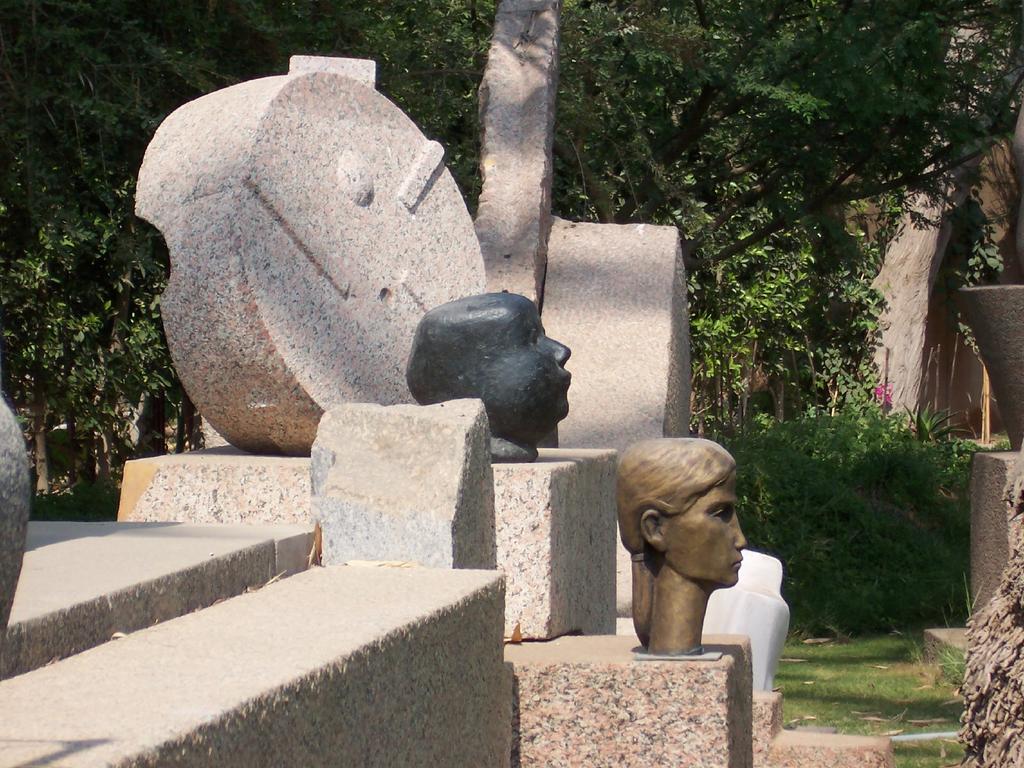
This weekend the weather was even better than last weekend and we decided to take the same trip to take some photos of the trail, since we'd both forgotten our cameras the week before. We set out as before, but the activity level in the fields was much lower now that the fast had begun. Much of the more difficult labour had been done shortly after sunrise so that the farmer and his family could rest during the heat of the day. With temperatures still above 30 C, this rest is necessary for people who are neither eating nor drinking during the daylight hours. We found our way to the atelier of Adam Henein and discovered to our delight that not only was he in, but he was quite intrigued by the fact that we had arrived on horseback and he invited us in to see his work and chat.

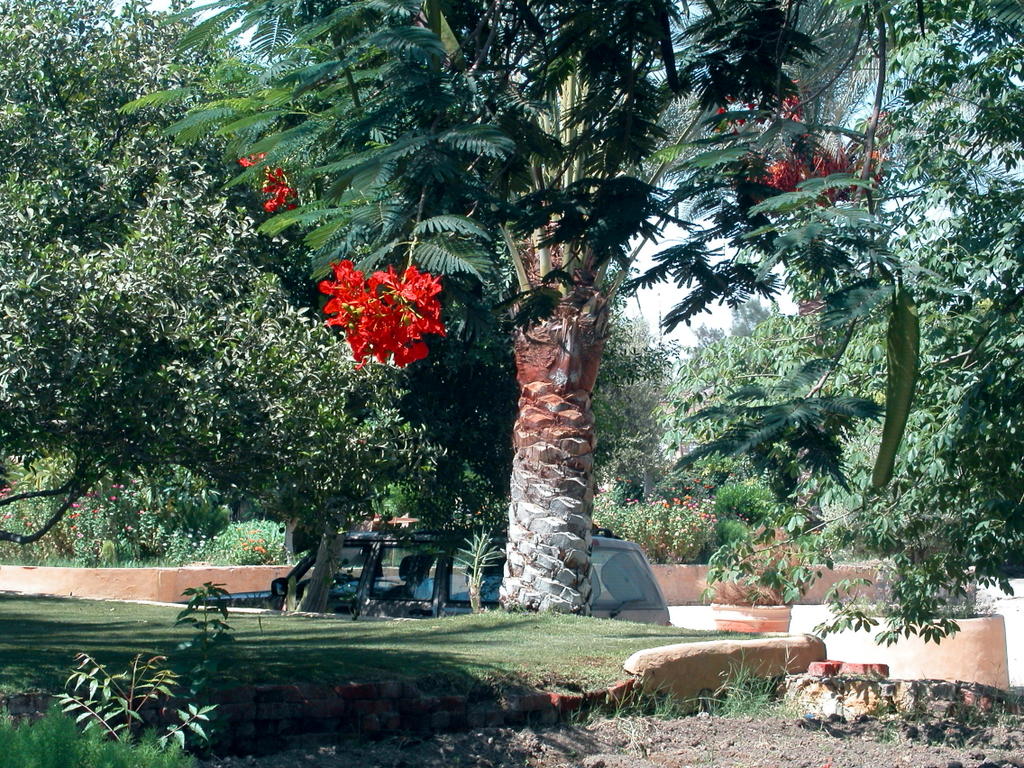
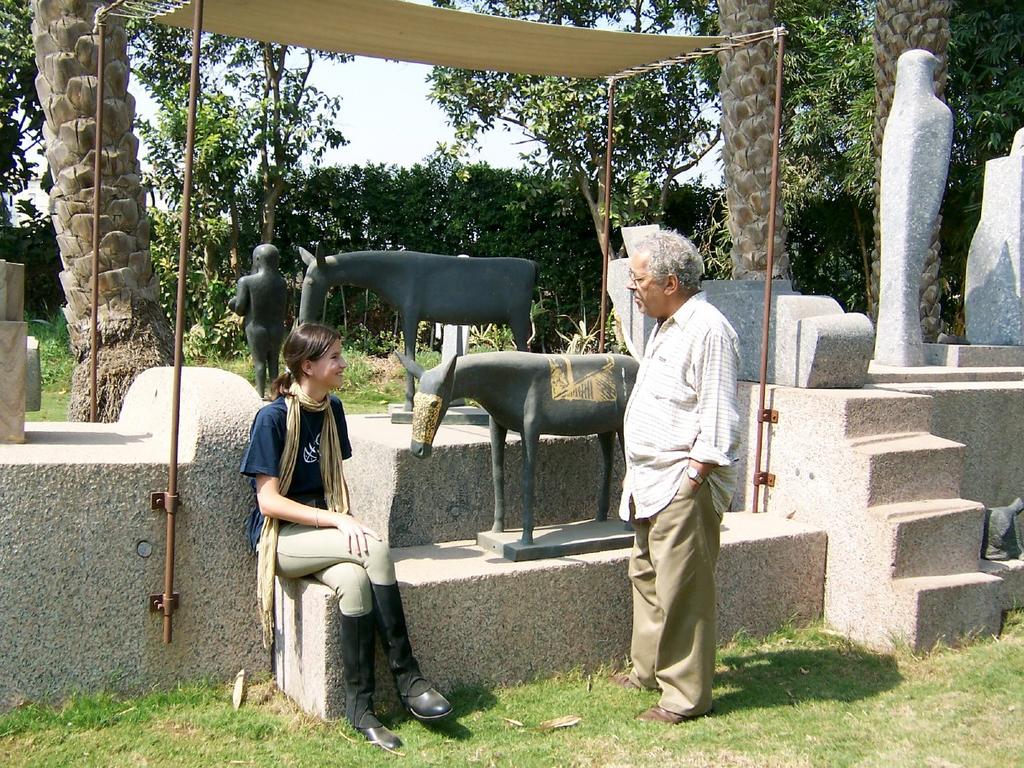
Adam Henein is a very lively older gentleman with wonderful lively eyes and a chuckle just hiding behind most of his sentences. We introduced ourselves and were ushered into his magical back garden which is dominated by a granite boat of pharaonic majesty, upon which various bronze and stone statues are placed. Due to a relatively recent theft, many of the smaller pieces are not left out in the garden anymore, but were brought out from the storage inside to be placed where we could view and admire them. And admire them we did! His work has shown in many of the major galleries in Europe and in New York, so this is not a forgotten artist at all. When we did some research on his career, dreams of owning one of his bronze donkeys took wing, since it would be highly unlikely that either of us could afford the piece. But the loss is less for me, since the artist is more or less a neighbour and I can always go and drool over the donkey in the Wissa Wassef garden.

Mornings like last Saturday remind me how blessed I am. I may never be able to afford an Adam Henein piece for my garden, however much I might love to have one of his donkeys, goats, or dogs adding its particular bronze charm to the more lively creatures that inhabit it, but I have had the pleasure of meeting one of Egypt's treasures. This was a morning that I will remember for a long, long time.

Wednesday, October 05, 2005

A Lady is Gone

A lady died last night. She was a widow with three sons of her original five still surviving. On the first night of Ramadan it is traditional that children break their fast with their mothers, a tradition that is the source of infinite amounts of conflict in many Egyptian homes when both the wife and the husband want to have iftar at their own mother's home. In most cases, this is solved by going the first night to one mother and on the next to the other. Last night two sons joined their mother for iftar and then sat chatting after the meal when she retired to her room to pray the evening prayer after the meal. When she didn't come out after an hour or so, it was assumed that she was napping, as she was in her early seventies and not in the best of health generally. Later in the evening when the sons got ready to go home, they went into the bedroom to say good bye and discovered that she was sitting in the chair in her bedroom in the position of prayer. Her legs had long ago become too arthritic to manage prayer kneeling on the floor. Her head dropped to her chest and her hands on her lap, it looked as if she'd fallen asleep in her chair, but the sleep that enveloped her was much deeper than any nap.

My mother in law and I didn't always see eye to eye. She wasn't wild about the idea of a foreign wife for her much adored oldest son and we were very different personalities. Once we moved to Egypt, we learned to work together over the years. I became accepted along with some of my funny ideas about childrearing as time went on and my children showed themselves to be decent young people and very good scholars, a trait that is well-respected in the family. Overall, our relationship was very good, I thought, until my husband died and the extent to which I was different from the rest of the family became rather more noticeable. There were conflicts and frictions, and although I was told by many Egyptian friends that these conflicts can occur even with Egyptian widows and their husband's family, I felt more and more unwelcome. Over the past year we had spoken rarely and I hadn't seen her for some time. We didn't have a great deal to talk about together and the experience had become more and more difficult. I was still hit hard with her death, although it was just the death that she would have wanted, in fact had spoken of for the past few years. For a devout Muslim, which she was, to die peacefully at prayer during Ramadan is an end to be richly desired.

She was a strong-willed woman who married very young and moved far from her family in Cairo and Alexandria to live in Khartoum, Sudan, in the late forties. In those days travel between the two capitals of Egypt and Anglo-Egyptian Sudan was a lengthy affair involving many days of train travel. She couldn't have been more than seventeen when she had her first son, with her second and third each following almost exactly a year apart in sequence. The first son was the victim of a fall on the train when the toddler fell, hitting his head, while his pregnant mother was caring for my husband who was an infant at the time. There was no medical help available until the train reached Khartoum a few days later, much too late for the boy. When many years later, she lost my husband unexpectedly she never really recovered from the loss. She often bemoaned the fact that a relatively young man had been taken while an old woman had been left behind. But who is to say how these things happen? Overall, somehow I think that they died their own deaths correctly.

She had my husband and three of his brothers to raise during the fifties and sixties in Sudan. They lived in a suburb of Khartoum known as Shaggara, or Gordon's Tree, where colonial villas were set on large lots. Her husband's family were rather well-connected, to say the least, as her sister-in-law was married to the President of Sudan after the split of Sudan and Egypt in the early 60's. My father-in-law, however, was an engineer in the Department of Irrigation and chose to move to Egypt when the division of countries occurred. When I first met them in the mid-70's, one of her sons was a career army officer, another was working in the hotel industry, while the third was still in secondary school. They were living in the upper floor of an old villa that had belonged to her grandfather, a musician to the Ottoman court and a founder of modern Egyptian music. Her mother, my husband's adored Momou, lived downstairs. The close proximity of the generations impressed me at the time. Later, the fact that my parents were both dead, my father before my marriage and my mother when my daughter was only a year old, but my in-laws were in Cairo was a deciding factor in our consideration of coming to Egypt. I wanted my children to have grandparents.

She was my husband's mother, she was my children's grandmother, and for many years she was the only mother that I had as well. This morning I did not go to her house to be with her sons and my son. I could not go. I should have gone. But my grief at losing so much over years of conflict and all at once, when she was finally taken as she wished to be, was simply something that I couldn't share with anyone. Somehow, I should have found a way to manage it, but I simply couldn't. Tomorrow the Quran will be read at a mosque in Heliopolis in your memory. I will be there for that. I'm sorry, Haboba. We may not have always liked each other, but I did love you.

Friday, September 23, 2005

Construction Village Style


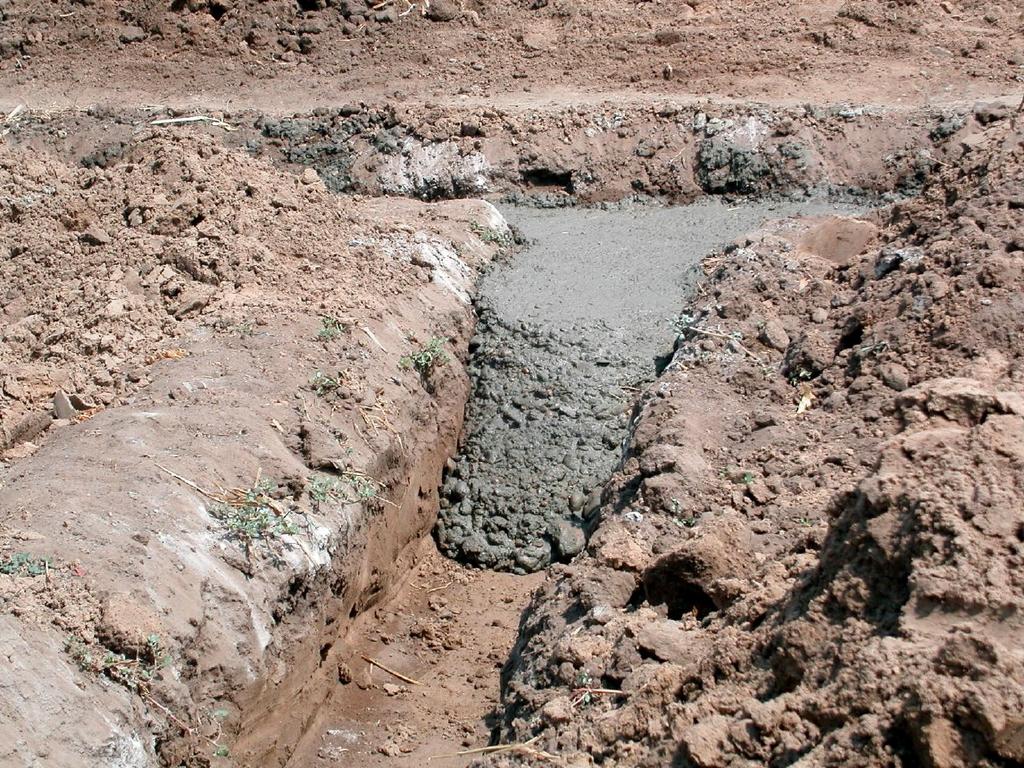
A couple of days ago I walked over to the land to check on progress. I found a couple of men working at digging trenches along lines that had been drawn on the soil in powdered lime, and another group of men mixing cement next to a large pile of sand and gravel. One man with a battered wheelbarrow was pushing loads of wet cement to the trenches where the wheelbarrow tipped its sloppy load into the trench to form the basis of the foundations of my new home. I'm building my house in the village fashion, which is to say, entirely by hand work and amazingly quickly. After watching the villagers put up a house with little more than some pencil drawings and powdered lime on the ground, one begins to believe that perhaps building pyramids wasn't such a huge task after all.

We have a very high water table in the Nile Valley, so foundations that go much deeper than about a metre run into standing water fairly quickly. This means expensive waterproofing for the foundations and such. For the villagers, any extra expense in building is a problem, making their situation and my own quite similar. So how do they build their homes? The walls are based with concrete set in trenches just under a metre deep. Then more concrete is poured on top of the base to create concrete walls that extend another half metre above the ground level. Brick walls are then constructed on top of the concrete, made of red brick with holes to improve the insulating quality of the brick. These walls are about 25 cm (just under a foot) thick.

Today, after having gone to see the work progress yesterday afternoon, I went to take some photos of the construction. I'd been warned that I'd better take the photos soon, or I would miss the entire building phase. Yesterday I'd found brick walls to the level of my chest on the concrete base. Today the walls were almost at the level to connect to the (as yet nonexistent) roof. As you can see in the photo, the standards of on the job safety in Egypt are absolutely the highest. The bricklayers stacked...what else?...bricks on empty 50 gallon drums to lay old boards to form a scaffold for finishing the wall. This particular wall is the outside wall of my new living room. Once the level of the floor has been raised and the tile or stone floor laid, I will be able to look out of the window to my horses in their paddocks.

Although the methods used to build the house are simple in the extreme, they are effective. A simple lead weight on a string, a plumb line is used to check that the wall of the bedroom (at right) is straight. One of the most important issues in the construction of the house is to ensure that there is a good flow of air throughout. Since the prevailing winds come roughly from behind the young man in the photo, windows on the walls behind him and to his right are vital. This is not exactly a palatial mansion that I am building. If anything, it's even smaller than the shoebox that I'm currently occupying, but at least it will be mine. The living room is the room at the right with the front door at the point where the dirt comes up to the level of the concrete. The bedroom is just beyond the young man measuring with the plumb line, while the kitchen is the room just in front of him. The bathroom will be just to the left.

While the house is small, the climate here is lovely and just outside of the kitchen and bathroom will be a 25 sq. metre patio under a grape arbour where I suspect I will be spending a lot of my time. Behind the house is a small garden with a stairway to the roof of the house where eventually I will build a two room apartment for my daughter. She is going to have the best view in the place and a terrace from which she can look out over the horses, fields and the desert. Right now the garden is full of wood for concrete pouring frames and some old bricks, but once we finish building, I will plant bushes, grass and whatever will make Molly the Corgi and Schmendrick the cat happy in their private garden. An openwork brick wall will ensure that the other dogs don't go back there from the patio and harass them. Molly is blind and Schmendrick only has three legs. They don't need any more problems. The little boy in the photo is the son of the contractor building the house. He can't wait for me to move in so that he can come and ride the donkeys and the horses. Since he lives just down the road, I expect to see a lot of Ahmed Saber.

Thursday, September 22, 2005

Lowlights of Autumn

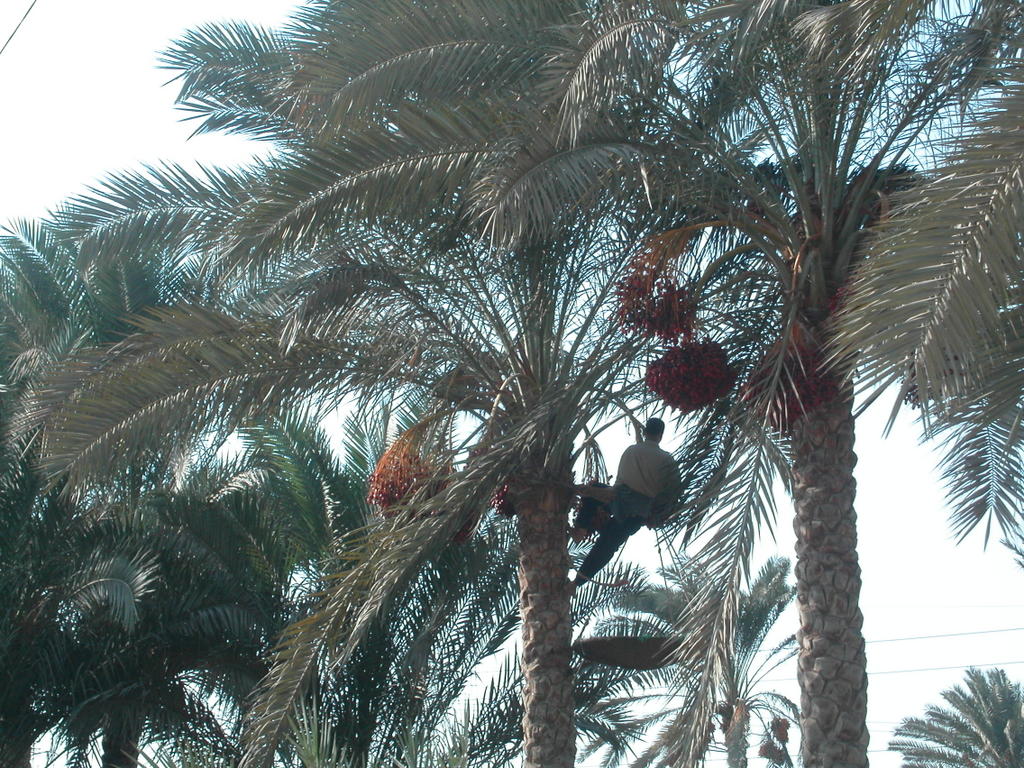
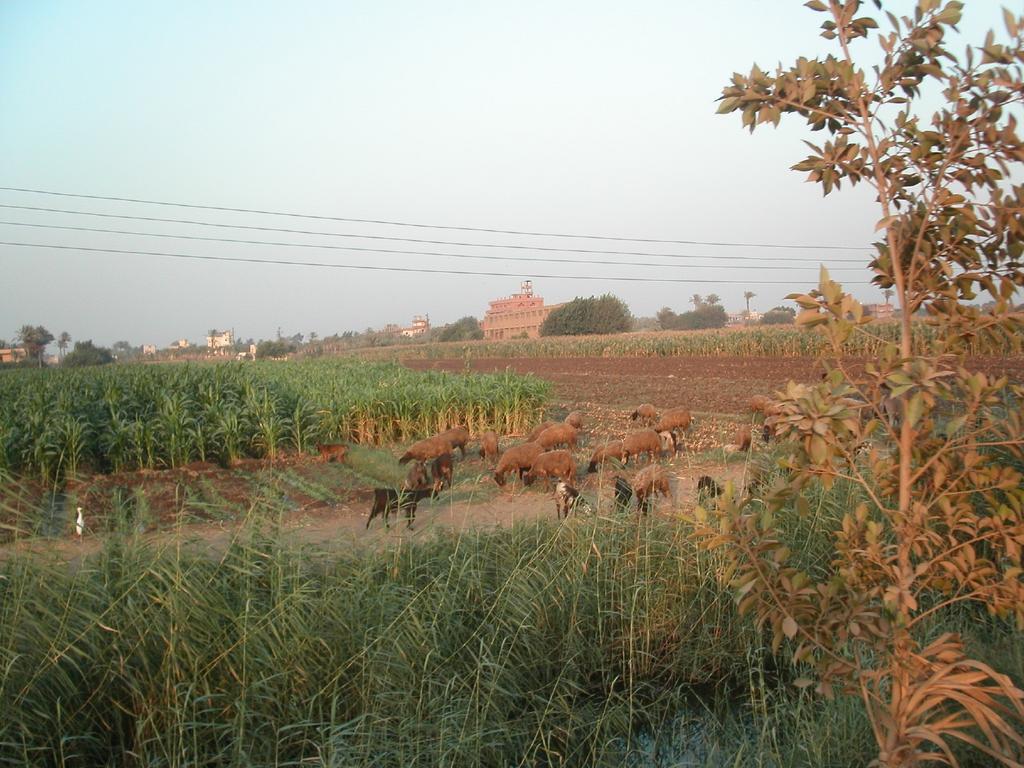
It's the first day of autumn and the temperature outside is 35 C or 95 F. Everyone I know is taking the afternoon easy if it's possible. But it is the time to get the fields ready for the winter berseem crop and the date harvest started last week. All over the countryside there are cornstalk shelters and walls being built to protect the drying dates from the predations of crows, rats, and youngsters, not to mention wandering cows who might like them too. And the cows are wandering in Egypt right now. We were riding in the desert an noticed a dark crowd of something on the sand about 100 metres ahead of us. As we got nearer, the horses' eyes almost bugged out of their heads because there in front of us was a herd of dairy cattle meandering along in the shade of the garden trees at the edge of the desert. My horses see cows all the time, but usually one or two or maybe four tied up in shelters next to their owners fields. They see cows being walked home in the evenings as the sun is setting, or they see a few cows walking out to the fields on the days when we go out riding early in the morning. But to see a group of about 30 cows walking along was a stunner to them. I have to give them credit; they didn't go nuts, spin and run off into the hills at the sight of all the bovine flesh on the hoof. But it was obviously a startling sight. I guess it's the first time I ever realised that horses can sort of count...at least in the sense that while one to four cows is fine, thirty is definitely overdoing it.

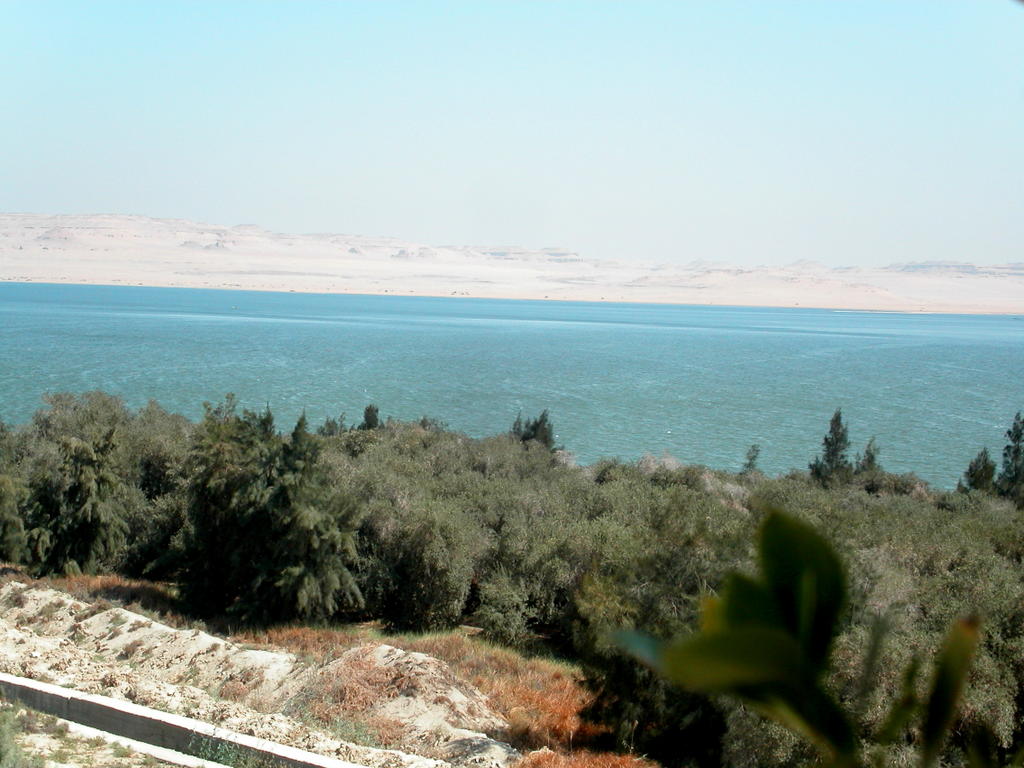
This is the time of year when visitors to Dahshur will see tents set up along the filling lake shore and flocks of cows and sheep grazing on the grass that will soon be covered with the water of the Nile. The authorities open the canals to the lake in the fall to provide water for the migrating waterfowl that travel south along the Nile, landing in the lake at Dahshur. This action is less out of concern for traveling ducks and geese than out of concern for the duck hunters from the military who use the lake in the late part of October. Still, they don't manage to shoot all of the birds by any stretch, so we can give them a bit of credit. This year I noticed the same herd of cows grazing in an empty field next to my land as I was visiting the site to sign the cement on the foundations of my house. I mentioned that I'd seen them in the desert just the day before and was told that they were visiting from Damietta. Now that is a stunner. Damietta is on the Mediterranean coast east of Alexandria, an easy 300 kilometres from here. And what are they doing here now? Apparently at the end of summer the cotton farmers spray their fields and to protect the dairy cattle from the spraying they send them walking the 300 kilometres north to Cairo where we don't grow cotton. As the spraying is done at the end of the summer when many of the summer crops are being harvested, the cattle have plenty to eat in the fields that have just been harvested. They make their way from field to field grazing on the stubble along the way. They'd been tidying up the fallen leaves and pruned mango branches from the gardens along the desert when we'd encountered them there.

For the rest of us who aren't harvesting dates, it seems to be the season for a summer flu, something wonderful that begins with a sore throat and turns into a nice chesty cough. I've had it for the past couple of weeks and the only way I can make headway is to stay home and be inactive. The riding trip where we saw the cows was just a simple walking tour out to the Japanese Hill to check that we could still see Dahshur, Sakkara, and Giza from the top (we could) and back, but the next day I felt like death warmed over. Even the dogs seem to be getting it or a canine version. Two of the Rat Terriers have been coughing at night so that the house sounds like a TB ward and now the Dalmation is kind of mopey and coughing a bit. The vet is sympathetic and has offered suggestions to help the poor canines, but basically this is something that we have to ride out. Now how am I going to get the dogs to drink warm lemon tea?

Monday, September 12, 2005

A Trip to Paradise


A couple of weeks ago, before the flood from Katrina, before the elections, Tracy and I drove out to Fayoum to join a friend of ours at the Fayoum Pottery School at Ezbat Tounis near Wadi Rayan. Fayoum is an oasis to the southwest of Giza, a depression in the desert that has been connected to the Nile since the time of the pharaohs. During the Greco-Roman period it was heavily inhabited and was an area where grapes for wine were grown. Now there is a large salt lake, Lake Karoun, that is bordered on one side by the agricultural lands and on the other by sandy desert. It's only about an hour and a half from Giza, but for various reasons (none of them that good) I've only gone there a few times in all the time I lived in Cairo.

For a few months now, Tracy and I have been wanting to visit Evelyne's pottery school there, since I've been collecting the handmade tiles that the children produce for use in my kitchen and bathroom on the new land. The children create wonderful whimsical tiles decorated with drawings of the local animals and plants. I've been buying my tiles from Mai Greis who has a gallery on Road 213 in Digla, and it was Mai who we were meeting out in Fayoum.

We set out on a hot August morning and with utter predictability the air conditioning in the jeep died as we drove down the road to the Fayoum highway. So it was open windows all the way and we were very happy to have had the foresight to have brought frozen bottles of water since the breeze was extremely dehydrating. As we entered the valley from Giza (there is another entrance near the Nile at Meidum) we turned towards the lake before we actually came to the city of Fayoum. I had a chance to take some wonderful shots of the farmers plowing their fields with water buffalo and of women and children picking cotton, but like an idiot I thought that we were running late a bit and I would stop on the way out...when naturally it turned out that they'd finished working and were nowhere to be found. Lesson in photography: take the shot when you see it.

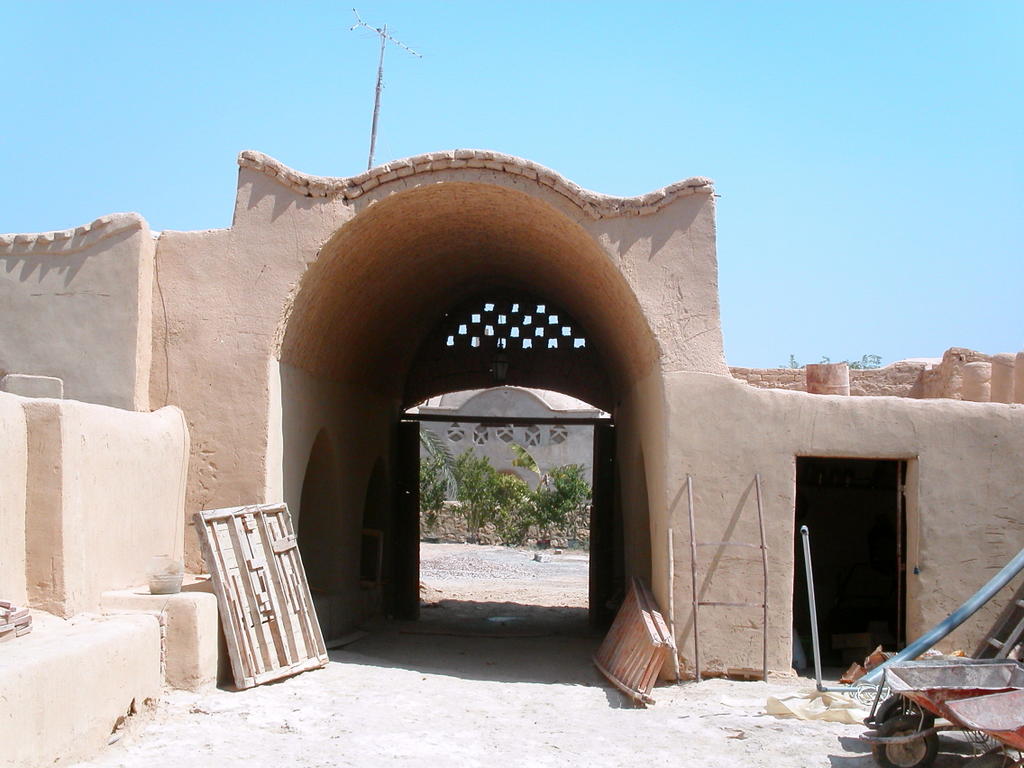
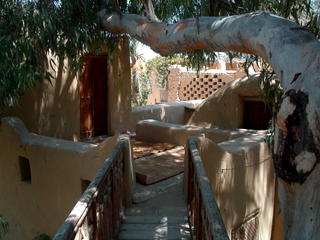
Evelyne is Swiss and has been living in Fayoum for about 30 years, the last 28 in the place where the pottery school now exists. You drive along the lake for some time with olive groves on the south and the blue of the lake with its small fishing and sailing boats to the north until you come to the road to Wadi Rayan, a national park with waterfalls. Shortly after turning onto that road, there is another left that takes you on a narrow track through a village that doubles back in the same direction as the lakeside road but higher on the hill. In the midst of the village is the mudbrick entrance to Ezbat Tounis. The grounds of Evelyne's home and the school are on rocky ground. Great slabs of limestone pave the garden and the patios of the house and school and considerable work was necessary to bring in soil for the gardens that are scattered throughout the compound.
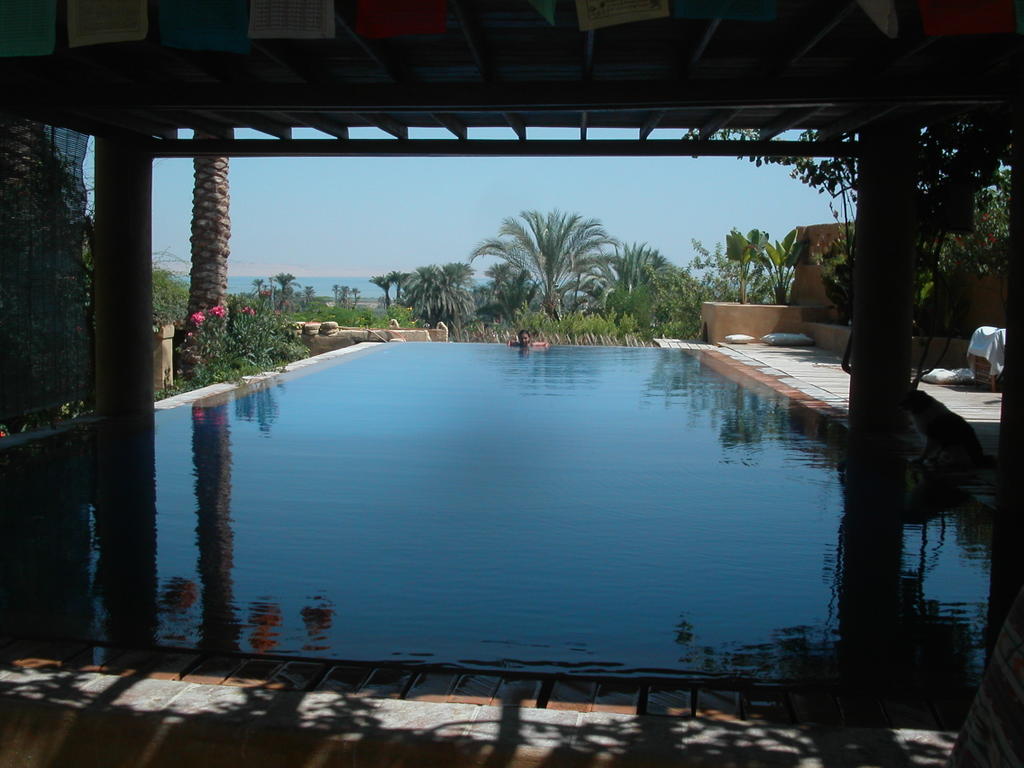
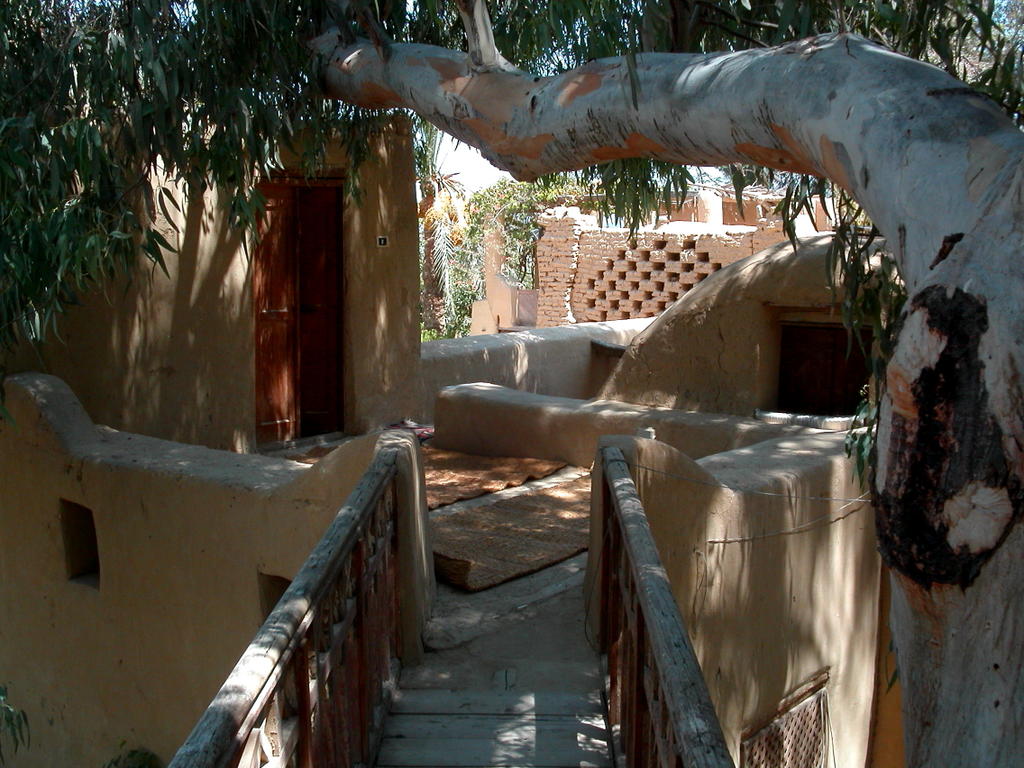
All of the construction was done in local mudbrick and plastered with mud mixed with straw in the Fayoumi style, which yeilds a very organic architecture that glows a pale gold in the sun. Evelyne greeted us with Mai and took us to the house where we had some cold water and relaxed in the shade for a bit. For the first twenty years that she lived in the compound they had no electricity and only a handpump for water. Now there is power and running water, and she and her husband Michel (the genius behind Nagada, my favourite Egyptian clothing http://www.nagada.net) even have one of the most lovely and simple swimming pools overlooking the lake. The aura of peace and tranquility that overwhelms the visitor to this wonderful spot is extraordinary.
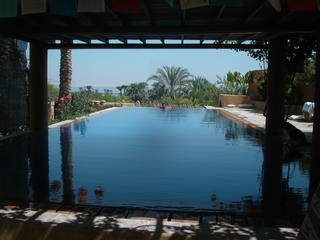
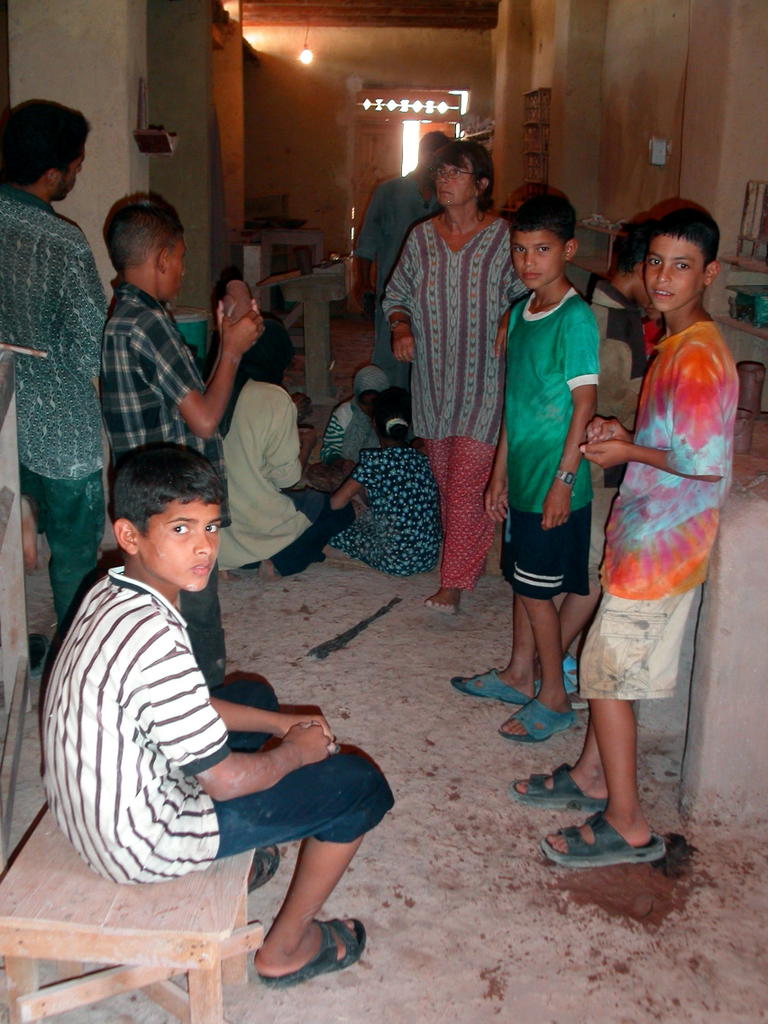
After cooling off in the shade of Evelyne's kitchen courtyard we went to see the pottery school and the showroom for the work done by the children, men and women who work there. Making our way across the uneven natural limestone carefully, since it was hard to pay attention to the ground with the lush gardens, towering palms, and green lawns all drawing admiring glances, we entered the school compound. The mud brick construction with its thick walls provides efficient insulation and the cool rooms are comfortable places for the potters to work.
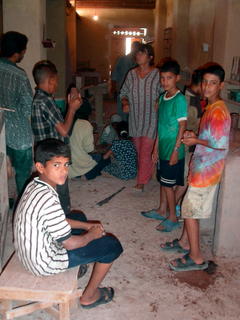
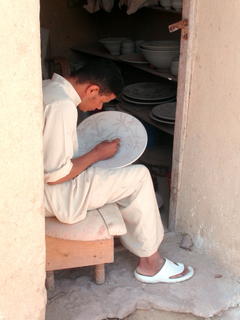
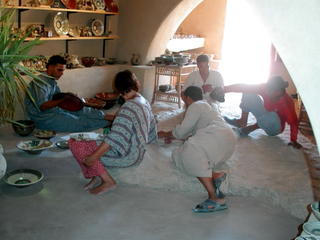
A group of children were waiting for Evelyne to inspect their pottery, while one or two were working at the wheels, affording a moment of hilarity when a clot of clay flew off hitting one of the children who was sitting near the potter's wheel in the head. There was no damage other than to dignity and the victim was quickly tidied up. Behind the working area is the handmade kiln where the pots and tiles are fired, while huge vats of clay stand in the courtyard and at one end of the workshop. The brilliance of the natural sunlight is used for the fine decorative work, and the potters sit on stools in the doorways to work. I had purchased a large platter from Mai's shop quite a while ago that depicted the breeding of water buffalo, a somewhat unusual topic for a serving platter. The style of the drawing and its oddity appealed to me at the time and Mai later gave me a companion piece when it came into the shop, saying that I was the only person she knew with a sense of humour warped enough to really appreciate the plate. I met the artist who had drawn these plates and we had a good laugh over them, as he acknowledged that they were not to everyone's taste. He was quite delighted to meet the crazy lady that he'd heard of who actually enjoyed his gamoosa plates and offered to make me more. I gently declined saying that I had probably quite enough now.
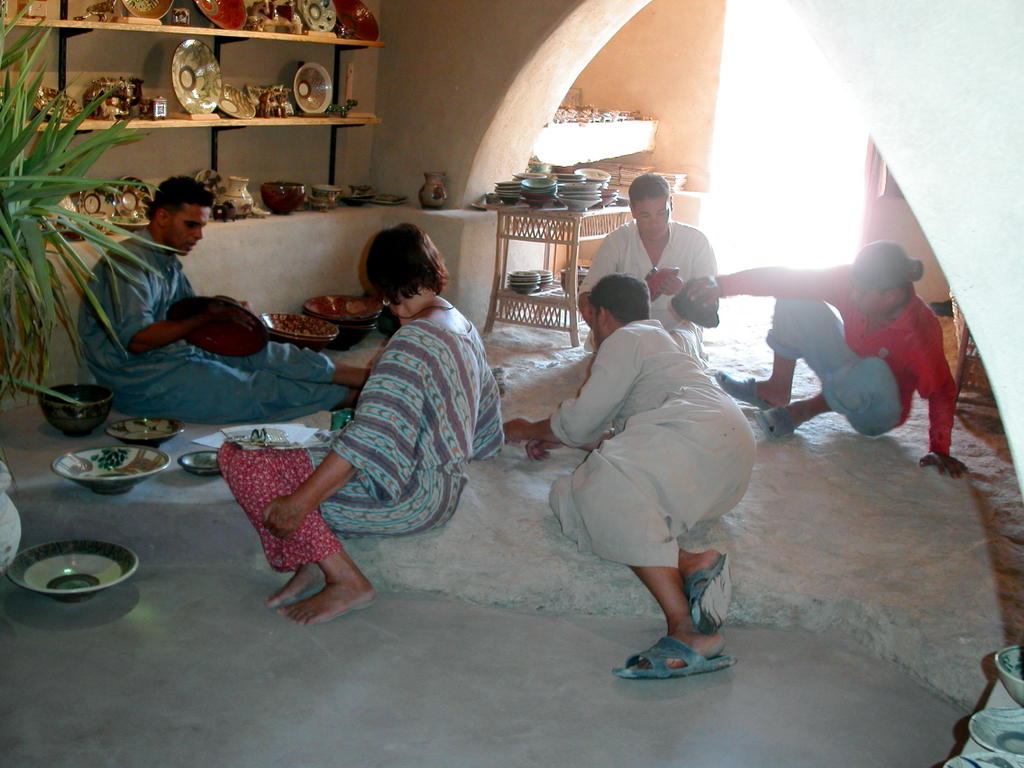
We then went to the more expensive part of the visit and the more stressful...but only in the sense that there were so many wonderful pieces to see and purchase that it was difficult to make up our minds on what we wanted. Across the courtyard from the workshops is a show room that simply takes one's breath away with the array of plates, bowls, cups, tiles, towel racks and so on. Mai was selecting stock for her gallery, while Tracy and I were looking at tiles for accents in our new homes. We probably spent a couple of hours in the showroom pondering pots, contemplating cups, and deliberating over dishes. While we were mulling over the possibilities, some of Evelyne's potters came in to assist her in assembling an order for someone and simply to work in the cool of the showroom. The display area is open to the courtyard with large arches to let in light and air, no doors here, and one daring sparrow flew in to have a chat with the drawing of a pigeon on a plate that was displayed on a wall. We finally finished our selection, telling each other that now we knew the way there it would be easy to come back for more if necessary. Tracy did order a set of dishes which will probably take a couple of months to finish, but that's fine because so will her house.
After spending a ridiculously small amount on tiles and dishes when one considers the lovely products and what they would cost outside of Egypt, we retired to the poolside for a snack of homemade water buffalo cheese, bread, olives and grapes. Tracy wandered around taking about 150 photos of the landscape, the house and courtyards, the decorations on the buildings, the woodworking, and so on as the style is the sort of thing that we prefer for the building that we will be doing. There is no way to upload all of those pictures, but I will upload the best to Flickr so that they can be seen there. When I do, I will post the url for everyone to be able to find them.
This is an extraordinary place by any concept. The travel there through the oasis and the desert, the wonderful compound that Evelyne and Michel have built over the years, and the hospitality of our hostess made for a perfect day. Of course the unpredictability of Egypt had to kick in at some point, which it did on the way home when the fuel line in Mai's old VW bug clogged necessitating a stop on the desert highway to Giza. Tracy and I drove on a few kilometres ahead to buy a bit of gas to bring back to Mai and her daughter who were stranded on the roadside and, since we would have had to overshoot their location by a significant amount had we come back on the highway, we opted to drive offroad through the desert amid much laughter and concern for the safety of our pottery in the back of the jeep. We all (even the tiles) arrived in one piece, a friendly mechanic in a taxi stopped by Mai's bug and removed the clog, and we were back on the road home in a short while.
Saturday, September 10, 2005

There But For The Grace of God...

Kodakgallery.com ?Slideshow

A friend of mine passed this site on to me. They are powerful photos taken by a young Honduran man who was working in one of the hotels in New Orleans during Katrina and the ensuing flood. There are almost 200 of them and it is worth every minute to look at each and read his comments as he tells the story of the storm, the flood, and his escape from the city.

What has this to do with Egypt? Like New Orleans, Cairo lies on the banks of one of the major rivers of this world, a river that has also been dammed for flood control. Like Louisiana, Egypt has been losing land as the sediments that used to feed the Delta no longer come down the river but are deposited behind the dams. Like Louisiana, Egypt has many important sites that would be damaged or destroyed by flooding and even more important we have a lot of very poor people who would have nowhere to go and no way to get there.
Are we likely to have a hurricane and subsequent damage to levees? No. But we have an enormous dam that does have a fault under it. I also daresay that most of the people living in this country have the same assurance that the dam will always be there holding back the waters of the Nile, just as the people of New Orleans were sure that they were safe behind their levees.

Guess what, everyone. Life isn't safe and we humans have been making it less safe on a daily basis. As we "improve" our world with our dams and reliance on technology, we also move farther and farther out of touch with the power of nature and the necessity of living WITH the forces of nature rather than the ability to ignore or override them. I don't think that governments and businesses are likely to heed this warning that Katrina gave us all. But maybe some of us ordinary folk can keep this in mind and be aware.

I remember a margarine commercial in the US when I was a kid, back from the days before they realised that margarine is actually as bad for you, or even worse for you, as butter. Someone gives Mother Nature a slice of bread with margarine and she thinks it's butter. When she realises that she's been taken in, she fries the person who gave her the bread with a lightning bolt proclaiming, "It's not nice to fool Mother Nature!"
Maybe we all need to keep that thought, with a slight adjustment, in mind...it's not wise to fool too much with Mother Nature.

Friday, September 09, 2005

Making an Election Work


Wednesday was a good day to stay at home for a lot of people. Some were concerned about problems during the elections, others like myself had a virus that seems to be making the rounds in Cairo giving you a sore throat and headache. So I was laying low for health reasons until the evening when I met a group of young friends at the Sheraton in Giza for a going away dinner that was planned for one of the group who is leaving for the US. It was me and five twenty-somethings, and the conversation very naturally was about the election. Three of the others are not Egyptian citizens while two of the young men are. These two had gone out to vote and been unable to. The third young man, a foreign journalist, had spent the day observing the polling. Interesting story.

Turns out that the system here (to use a somewhat inappropriate word since it does imply some organisation) involves having a three week period in which one must register to vote, but this three week period was last November, almost a year before the election. Once the period is over, I'm not sure that it's impossible to register, but it certainly is difficult. Then there is the question of WHERE you can vote. Apparently, you have to vote in the district in which you registered your national ID. So one of the young men who lives in Maadi but works in Dokki tried to go from his office to a polling place only to be told that a) he should have registered a year ago and b) he couldn't vote in Dokki anyway. The other young man made the rounds of polling stations in the Heliopolis/Nasr City area looking for a polling station where you could vote if you had moved from your district, but he never found this fabled polling station. Both of them spent about 4 hours wandering around polling stations talking to people and trying unsuccessfully to vote.

Everyone, fairly naturally, was predicting a win for Mubarak, especially since most of the "helpers" at the polling stations were in Mubarak hats, pins and other paraphenalia. So the first contested election here is over without any major disasters and with the predicted result but the boys had some interesting suggestions to improve the system. They suggested that there should be a major campaign to let people know HOW to vote and how to register to vote and that the powers that be need to begin to take into account the fact that Egyptians no longer spend their entire lives in one district of one city as used to be the case. One semi-serious suggestion put forth to ensure a clean vote was to have the ballot boxes made of plexiglass so that everyone could see that at least they were going into the polling stations empty...though that didn't really help the fact that the general impression was that there was no control over the ballot boxes once they left the polling station.

It's going to be interesting to see the fallout on this election. No one was really expecting much of a change from it and it looks like no one is going to be too surprised. For myself, at my age I can see that sometimes a small change is easier to institute than a large one, but the next step has to be another change to keep up the momentum. Will that happen? Who knows, but let's face it. Hosny is much older than I am and he can't last forever so a change is coming no matter what we want.

Oh, and what does the picture have to do with all this? Nothing at all actually. I just shot it through the front window of my jeep one day because it seemed to symbolise the way a lot of things are done here. More being carried than the system should be able to handle and nothing fastened down terribly well. A lot of vision with the details left flying in the wind.

And the parrot soap opera came to a close when I moved the nest box from Ali's cage to Mona and Fritz YB's cage. The pair had chewed theirs to bits and wanted Ali's unused box. Guess that birdbrains are smarter than we think.