Saturday, May 06, 2006

Imho-Who?


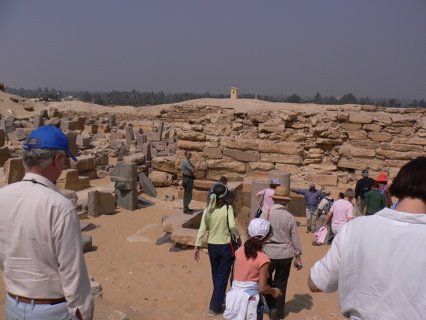
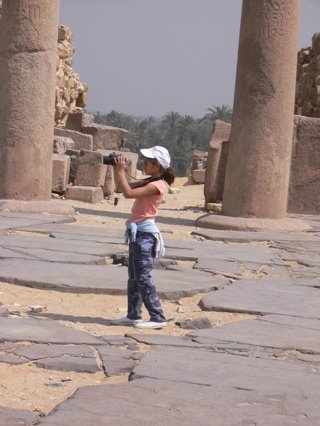
I had a chance to see one of Egypt's new jewels today. My friend Nathalie came to ride, and we decided to go to the new Imhotep Museum just inside the main gate of the Sakkara complex. I have a wonderful trail that wanders through the fields and ends at the entrance to the Sakkara antiquities area. In the past, I'd ridden up to the main gate with friends, been asked to pay the entrance fee and we'd gone in. If someone wanted to visit one of the sites, the others would hold the horses while the visitor looked around. Often we would leave through the desert to return. Lately I'd gone to the main gate and been refused entrance even when we offered to pay the fee with the guard saying that horses were a security risk. Considering that they don't have the trunk space of a Peugeot, I could never really figure that one out. Nathalie, however, has a diplomatic pass and no one said a word.

I'd seen the museum as they were building it below the hill that the cars climb into the Sakkara complex and had ridden past the construction site a number of times. This time we rode down the driveway into a carpark that was not very crowded. We were asked for Nathalie's pass a number of times, each time the official looking in disbelief at the horses. We found a kind soul who was willing to hold the horses while we checked out the new museum.

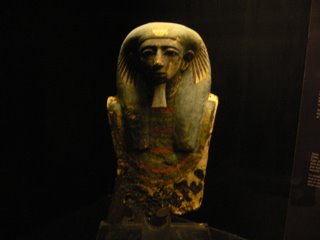
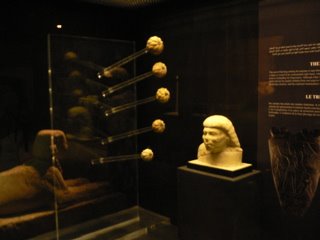
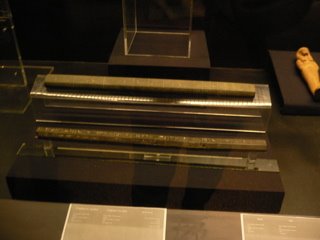
Double glass doors parted and we walked into a welcome wall of airconditioning. The museum is in honour of the pharaonic patron saint of the Sakkara pyramid and all the other pyramids, the architect Imhotep who designed the step pyramid for King Djoser so many thousands of years ago. Unlike the cluttered Egyptian Museum, the exhibits are sparse and for the most part well-labeled. The labeling process is still underway and we had to ask one of the employees to confirm our suspicions that the stone rods in the second picture here were in fact measuring rods. Now you know how they measured the pyramids.
Throughout the darkened rooms, glass cases of artifacts were lit to show the stoneware, the tools, the decorative objects and parts of some of the walls of the Sakkara complex. Some of the tools shown are essentially identical to those that I see workmen carrying today. The continuities in Egypt are both frustrating and charming.

One of the exhibits was particularly welcome to me. A couple of years ago the History Channel contacted me to supply them with horses for an episode of "Digging For The Truth". My horses appear (most beautifully I must say) in perhaps all of two minutes of the show, but at one point the narrator was interviewing Salima Ikram who was showing him the faience tile wall in the interior of the Step Pyramid. The interior is too unstable to allow visitors for the most part, so they've taken a part of the faience wall and reassembled it in the museum for visitors to enjoy. The blue pottery tiles were created to replicate the mats that used to hang on the walls of the houses of the time. The turquoise tiles are lovely in the limestone walls.

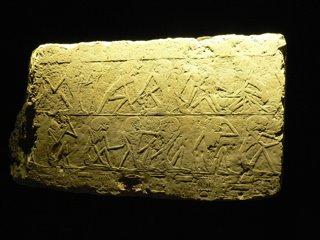
One of the most stunning pieces in the museum is a frieze of starving Nubians that were carved to commemorate the pharoah's visit to Nubia. The people are carved in exquisite detail in the most difficult style of frieze carving, excised from the background layer. This means that the important figures are standing out from the background and the artist had to do much more work to carve everything else away. It also allows for much more detail, in this case the pinched faces and prominent ribs of starving people. This is the only depiction like this that I've ever seen and Nathalie as well found it extraordinary.

The other room that was very impressive, but of which I have no photos because my battery died, was the Lauer Library. This is a reconstruction of the library that existed in Lauer's house at Sakkara where he worked from the time he was about twenty years old until he was almost one hundred, excavating and reconstructing the Sakkara complex. You can see his desk with some of his writings and the book cases with his reference books and those that he published about the site. His career was one of the most impressive in the history of Egyptology.

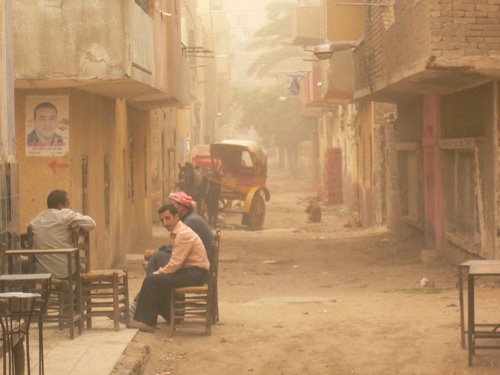
When we left the cool of the museum, a wall of heat from the desert, the counterpart of the climate control of the museum, hit us like a truck. More visitors had arrived and we looked around for the horses, finding them parked along with various cars and buses in the parking lot. Nathalie was going to be late for lunch with her husband and the weather was turning windy and hot, so we made our way back through the fields to the farm, and none too soon. I brought the dogs home with the intention of going into Maadi to see a friend, but phone calls and small chores interfered with my departure until with a roar a sandstorm descended on the house from the desert. Palms bent almost double and I could barely make out the garden fence from my front door. The power went out and the sky was so dark that I went about lighting candles. The dogs and I sat indoors hiding out and feeling sorry for the parrots who actually didn't seem terribly bothered by all the racket. Now we are simply hoping that it will all blow over tonight and leave us in peace.

Tuesday, April 25, 2006

Sham el Nessim? In Dahab It Was Smoke

Dahab blasts pinned on suicide bombers : Mail & Guardian Online

I had planned a post on one of my favourite holidays in Egypt, Sham el Nessim. Sham el Nessim (it means 'smell the breeze') is an ancient festival from pharaonic times when all the families in Egypt head for the closest spot of green to spend the day in celebration of nature and spring eating fish, onions and eggs. I spent the morning in the desert with my neighbour Morad who was riding a wonderful mare I bought last year. Stella has spent a year with us hopefully regaining her sanity after time at the racetrack and pyramids stables....Yesterday she showed me just how much progress she'd made and I was walking on air all day.

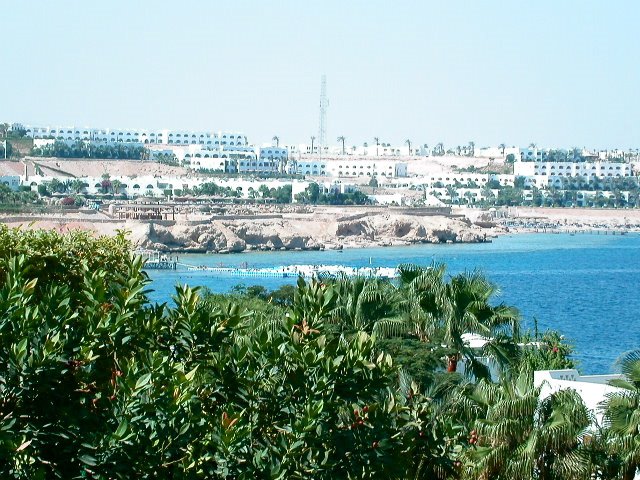
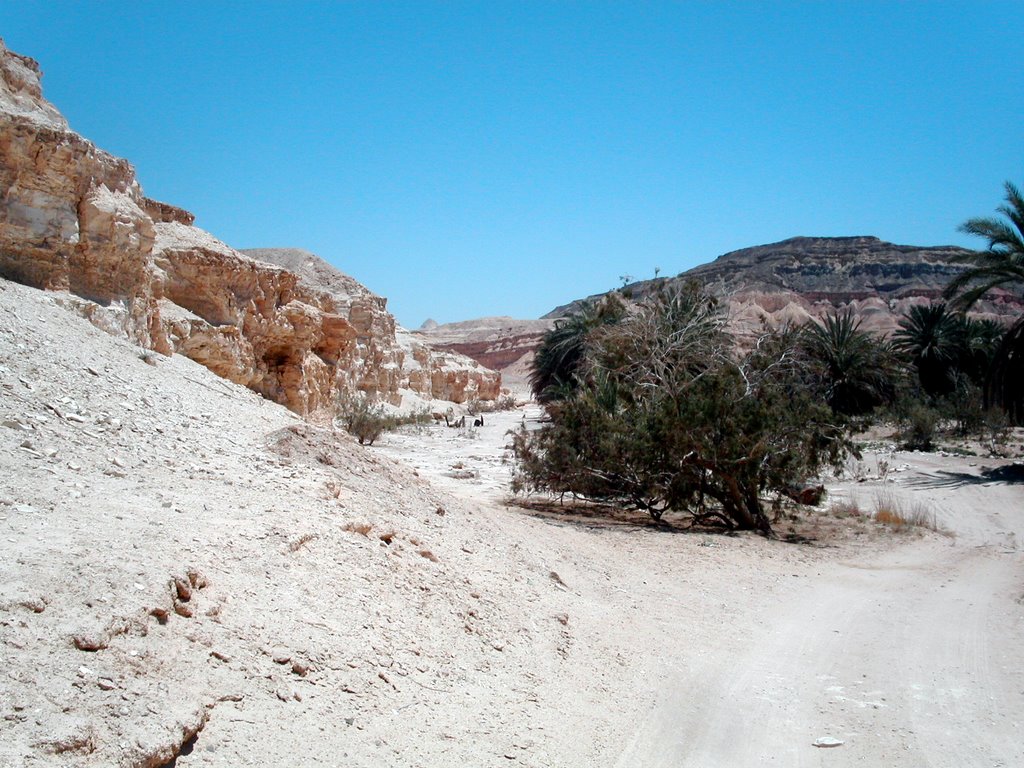
Until evening. A group of us were sitting around the remnants of our own Sham el Nessim feast when a phone message told us to turn on the news. Damn. Another tragedy in Sinai. Following the news on the BBC this morning we listened to the usual speculations regarding Al Qaeda, but the feeling for many of us is that this is part of a serious disaffection between the Egyptian government and the Bedouin who for centuries were the only inhabitants of Sinai. The peninsula was one of the most beautiful and desolate places in the world, bare rocky crags that support the barest of desert life looked down on bare sandy beaches where the clear blue sea bloomed with multicoloured fish and corals in a glorious counterpoint to the reds, browns and blacks of the desert rocks. Until recently, this was Sinai. Most of the roads had been built during the Israeli occupation and there was little interest from the Egyptian government in the area at all.

Entrepreneurs realised the potential for touristic development of the Sinai and began building hotels, camps, time-share apartments and so on on the coastal areas. Unfortunately much of the development was undertaken without any of the necessary environmental impact studies, but that is another story. What is important for the issue here is that the lands where the coastal Bedouin families had been fishing are no longer available to them because the peninsula is almost wall to wall development on the coast. Families that sold land to developers often can't afford to live in the new towns that are growing around the tourist areas. Land that was sold for peanuts to Egyptian developers years ago has earned millions of dollars, euros, yen, what have you, for the businessmen, but the Bedouin have simply been pushed into the barren interior of the land where the most promising work is in the growing of marijuana and opium poppies. Naturally these enterprises are not looked upon with favour by the government and the farms are the targets of drug raids on a regular basis.

But has anyone considered sharing the benefits of development with the local families? Very few. With all of the money flowing through Sinai, very little has stayed there to benefit the Bedouin who barely manage to exist in their beautiful hell. No schools, no training, no hospitals. What are the children here expected to do in the future in this situation? How are children who have no material assets, no chance to learn the skills needed in the increasingly urban society that we have here, going to manage as adults who have no possibility of employment?

Why do we need to look abroad for the perpetrators? As the government has said, this is a local problem but it is a very serious one that needs attention.

Saturday, April 22, 2006

She's Pretty Foxy


It's 5:30 pm and there is a hot wind off the desert. The temperature is 100 F and the only happy things that I can see are the flies who are landing on my arms in hopes of some moisture and the dogs racing around the parrot cages hoping to catch a rat that will be flushed out by the hoses running down under the cages into the burrows. So far the rats are sitting tight and I would be inside typing this except the dogs work better when I'm around...sounds a lot like kids and employees, right? Thanks to wireless networks I can sit in the garden gradually stewing while I type a blow by blow account of a rat hunt. What a thrill, huh!

While the canines are patroling the parrot cage, Mona our one-legged Grey is inside entertaining the world with whistles and calls as she watches activities from the living room window. Her stump is healing very well and hopefully some time in the relatively near future we will outfit one of the new flight cages that are in the process of being assembled on the new land with some special landing perches since she needs platforms now more than branches. The flights are being fitted with a tree in the center of them to give the parrots some nice branches to play on and chew. The "trees" will be actually large orange, mango and mulberry branches.

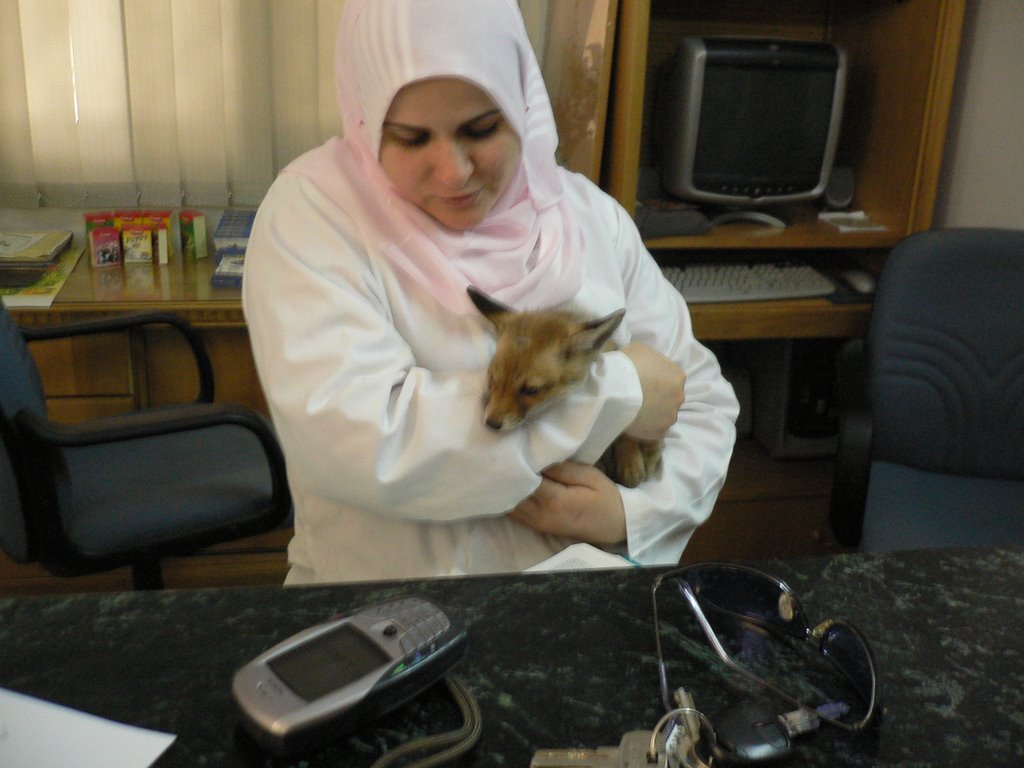
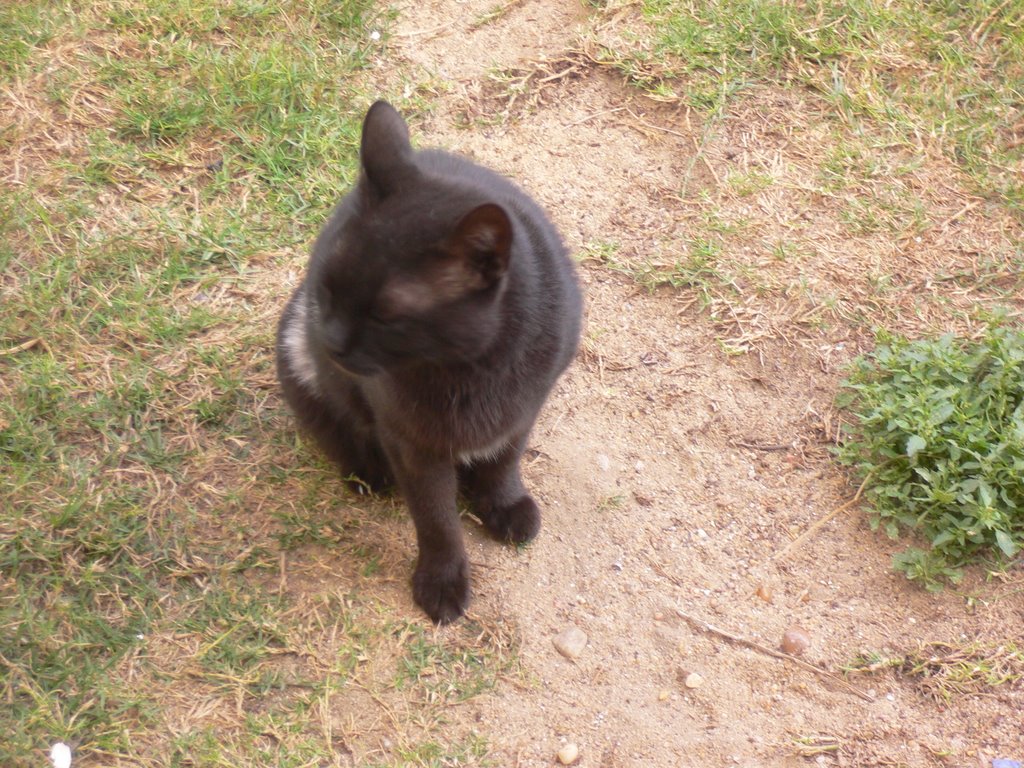
The household has a new member as well. A week ago one of my grooms showed up with a young fox cub whom he had found along the road. She's very tame and may have been captured very young or even raised in captivity, but she has a break high in her right hind leg that can't be put into a cast. We took her home, gave her a good bath (so that now she had nice clean fleas), and popped her into a carton for a trip to the vet. Our vets informed us of the break, but other than that really couldn't do much except pet and cuddle her, which she seems to appreciate. We fixed up the wire on the back garden where Schmendrick the three-legged black cat and Molly the blind Greek Corgi live. This is our "special treatment" area since those two are very welcoming to the odd creatures that we foist upon them. As both Molly and Schmen are named after characters in The Last Unicorn, it seemed only appropriate to tag the poor fox with Lady Amalthea (10 points to anyone who knows who she is), but we mostly call her Thea.

She's made herself at home in the laundry room and seems to be quite comfortable with dry dog and cat food. We give her scrambled eggs mixed with yogurt and bits of meat or fish as well and she's thriving. Once her leg heals, she may be able to scale the fence of the garden and if she wants to live free she's welcome to. But I suspect that she may just stay with us as she is totally tame. We'll see. Meanwhile when I sent my daughter in New York a photo, she sent me a message that made me laugh out loud. "Well, Mom, you have the social outcast(Molly), the cripple(Schmendrick) and the orphan fox cub, so I guess now the back garden is The Secret Garden". Having the cast of The Last Unicorn living in my own Secret Garden isn't such a bad idea.

Score so far: Dogs 1 Rats O

Saturday, April 15, 2006

Still Here, But It's Been A Tough Spring

The sandstorm that I wrote about last in March took a toll on me. We had three days of serious dust with the one storm, followed by a week or so with the odd very dusty day. Guess who lives in the middle of the Sahara despite the fact that she's allergic to dust...naturally. I probably shouldn't have been out taking pictures, but they were pretty cool, so it was worth it, or was it? I spent the second half of March and the beginning of April seeing more of doctors than friends or even my horses. My old buddy, allergic bronchitis, came to visit again and laid me low for almost a month. After thorough check-ups including CT scans and chest xrays, I'm on my asthma medication for a while but I feel like a human being again. For a while there, I would take some clients riding for a couple of hours and then come home to sleep for three hours totally exhausted. Running your own enterprise in which you must take a physically active role does have its drawbacks.

I didn't turn into a total turnip during my downtime, however. There were some memorable events during March and early April. One of these was a chance to be a tourist again one Saturday morning when the International Women's Association hosted a tour of the Abu Sir pyramid complex. These pyramids which are essentially in my back yard have been closed to the public for some time during a period when archaeologists have been actively excavating and studying parts of the complex. There were about 20 visitors that day listening to a Czech archaeologist explain not only what they had learned about the people who had built these structures, but also the relevance of some of the information. I had never really thought much about the fact that these enormous religious structures were populated by civil servants and had to be supported by the population of Egypt until it was noted in the lecture that this entire process had a life of its own that impacted the stability of the state over time. While initially the projects that were mainly carried out during the months of the inundation, the flooding of the Nile, when the farmers could do nothing on their land because it was all under water, had the function of strengthening the central government by bringing workers together to build temples and pyramids, later supporting the many priests needed to maintain the temples became such a burden at times that the state itself collapsed. As the archaeologist pointed out, their studies shed light on the life cycles of entire civilisations that faced many of the pressures and problems that our modern societies are now facing, and they can provide clues that might help those trying to solve modern problems.

At one point in the lectures, a very thought provoking question was raised. One of the women present asked in what language the inscriptions in the temples were written. The archaeologist answered that the language was ancient Egyptian, which is probably most closely related to the Coptic language used in the Coptic church. Virtually all Egyptians now speak Arabic, and because of their strong film industry, Egyptian Arabic is a dialect that is understood by almost any other country, much as Los Angeles English is easy for most people to understand. When the lecturer mentioned the relationship between Coptic and ancient Egyptian, the woman said, "So the Copts would be the 'real' Egyptians, then"... a statement that absolutely stunned me. While on the surface it might make some sense, Egypt has existed for almost 10 thousand years, a period of time that has seen invaders of many, many different ethnic and language groups come, rule, and either leave or be absorbed. By the time the Coptic church was established early in the Christian era, Egypt had seen the Hittites, the Hyksos, the Sea Peoples, the Persians, the Nubians, the Bedouins, the Greeks, and the Romans, to name just a few. Ruling families of neighbouring lands had sent children to marry into the Egyptian royalty, slaves to serve them, and conquered armies had been absorbed into the general population. What, then, would be a "real" Egyptian? The entire idea of humans as anything but a wonderful conglomeration of backgrounds really doesn't make any sense at all. The Coptic church may have preserved some of the old language, but the people of Egypt themselves are a most remarkable mix of every possible background from Europe, Asia and Africa. This is part of the charm of the country.

The melting of populations continues today with intermarriage and what may surprise some people, an active interest among many people from North America and Europe in coming to live and work here. While many of the foreigners living in Egypt are employed by companies from abroad, I'm often surprised to find there are quite a lot of people, especially young people who are looking for a different sort of working experience, who come here and find jobs in all sectors of society. The mother of a friend of mine arrived mid-March to spend some time with her daughter, a native Manhattanite who is working in publishing here. Friends of the mother also arrived from Europe, North America and Jordan to have a small reunion. While some of the older generation went off to visit pyramids by car, we kidnapped a teenage daughter who is completing her high school education with her friends in Jordan. A horse nut, Jess was more interested in galloping past pyramids than in trudging around them.

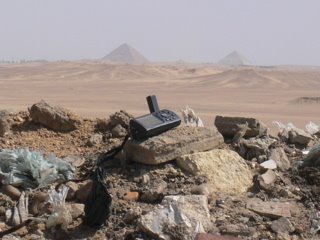
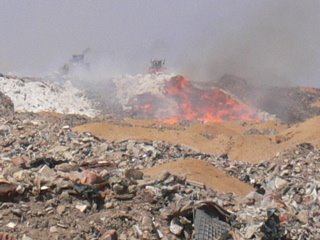
I have also been involved in some work that I feel is rather important. I've been riding my horses in the desert in this area for about 13 years now. When I first moved from Alexandria, I brought my two mares to Sakkara Country Club at the edge of the desert and I was delighted to have the desert to explore. The sand rises to a plateau just behind the Club and on very hot days the plateau was a lovely place to ride since you could be sure of the prevailing winds from the sea. Over the past 13 years, however, the Governorate of Giza has taken part of the plateau for the municipal dump. Gradually the dump has grown in size until recently I found to my surprise and horror that it was beginning to encroach on the wadi that stretches west from the Sakkara Step Pyramid. Talking to a friend of mine about it, she passed word to Dr. Zahi Hawass of the Antiquities Authority, who has expressed a strong interest in the situation. We spent a day on horseback and another morning with the jeep taking photos of the dump's expansion and taking GPS readings so that the exact locations are verified. We will be taking a cd with the photos to his office sometime soon because the situation is really out of control. The desert is a resource for people in Cairo, and it needs to be protected not abused.

Wednesday, March 08, 2006

A Change In The Weather


I love winter in Egypt. When my friends in Europe and North America are complaining about weeks of rain and snow, I get to smugly joke about Egypt being the place with no weather. There is a family joke about a weatherman being hired here about every four years or so, coming in to work to announce that it will be sunny and warm, and then leaving until the next one is hired. But yesterday was Egypt's chance to remind us that we can have weather that isn't perfect once in a while. It was hot at 9 am when I was feeding the birds. Hot and still. Odd after days of cool, sunny weather. A friend called me and as we were chatting I noticed that the wind had risen and was blowing off the desert, rather than from the valley. Rats. I warned my caller to close her windows because it looked to be getting dusty.


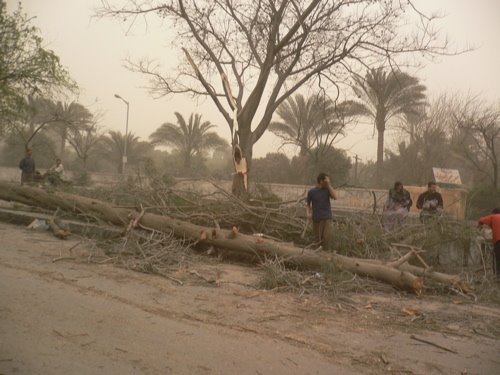
An hour later visibility was down to about 100 metres and the wind was howling off the desert. My neighbour Morad called me to ask if I could give him a ride towards Giza because his aging Jeep Wrangler wasn't in the mood to work again, and I was happy to oblige since I needed to go into Nazlit Semman to buy some chicken feed and vegetables to bake into the parrot bread that I have to prepare every week. We headed out in my Jeep with the airconditioning set to recirculate inside the car to keep the dust to a minimum. Driving down the road along the canal was hair-raising. The huge eucalyptus trees that line it giving us blesed shade in the summer were creaking and groaning in the wind. One nice branch falling on the Jeep could be more than a massive headache.


I was relieved to be past the eucalyptus when we got to Nazlit Semman, but that didn't stop the trees from being a hazard. As we came out on a road from my chicken feed man, we found a group of men chopping up a huge casuarina that had come down on the edge of the canal. They'd hauled the branches that stretched into the road back onto the sidewalk but traffic was still in a snarl. We had a list of items to pick up at shops for some of our neighbours so we wandered around Nazlit Semman stopping here and there to collect part of our treasure hunt.


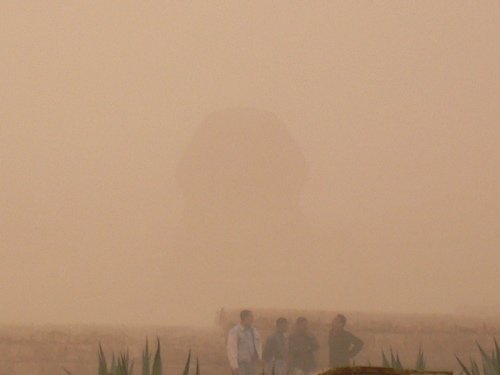
Some cheese and yogurt were on the list and Morad recommended a small grocery near the Sphinx. I was amazed to see tourist buses leaving the area. I'd assumed that they would have called it a day long ago and headed back to less dusty areas like hotels. I couldn't resist taking a picture of the Sphinx while waiting for Morad to finish buying things in the store. You could barely make out the huge figure that rests at the base of the Giza Plateau. Figures would sort of stagger out of the brown fog that enveloped the area and make their ways to the few remaining tour buses that were still parked along the road.

The camel and horse men had packed it in long ago. Streets that would usually be filled with tourists on horses and camels were empty. A few of the men sat around empty coffee shops, while most people tried to escape the streets as quickly as possible.As the designated driver I was lucky in that most of the time I was sitting in the car waiting while the errands got run.

The skies gradually grew darker as the day wore on but the wind didn't drop until much later. When I arrived back at the house, Awatif told me that the power had been out most of the day, one of the other trials of these wind storms. Probably a tree down with a power line. This morning the house looked as though Awatif hadn't been in for a week...all her work the day before was for nothing. When the weather here changes, it's rarely for the good.

Monday, March 06, 2006

Mothers Of The Bride

There are people who have commented that I candy coat Egypt, a country with lots of problems where people have very hard lives, when I talk about the happier moments in our lives here. Well, I don't think so. The fact is that at my age I don't have so many illusions about living happily ever after in any sense. I've lived long enough to have seen that most of us spend our days in fairly stressful yet often tedious tasks that never seem to end. We spend years worrying about jobs, taking children to schools, running late to dental appointments, shuffling our money to meet bills and obligations, and then to relieve the boredom, something really horrible happens to us and we lose loved ones or find a dream shattered. I don't believe that human beings anywhere lead lives that are particularly calm or unnaturally joyous. But I do believe that most of us are granted brief moments of happiness, love, and comfort in the company of our friends, family and neighbours or by the beauty of the world in which we live, and all too many of us forget these blessings in the daily grind of living. In one sense, the events that I describe in my life here are not really about Egypt but about the common human joys that we all share, just as we share the common human sorrows. When I began writing my blog, I was concerned about the fact that somehow there was an "us vs them" attitude about people in the Middle East, that the journalists had managed to let people forget that the people with whom I'd chosen to live, the Egyptians, were really not so different from the Americans, the French, the Taiwanese in their daily lives. Sure, we all live in pyramids and drive our camels to work and go grocery shopping in belly dancers' outfits, but other than that we are just plain folks. So I decided to record some of the experiences of my daily life, and being a fairly easy-going, patient, and friendly person myself, most of those experiences are positive. I've had my share of horror but I'm not sure that the bad parts of my life have anything really do with being in Egypt as much as they have to do with human weakness in general...not my favourite topic and one that can be covered by many news sources.

Last week my young housekeeper got married to my neighbours' head groom. I could be concerned that she was too young to marry at seventeen, but she'd been orphaned a few years ago and that is a rather maturing experience. She's been working since she was about fifteen to provide the money for her household effects. It wasn't an arranged marriage. Gaber had been interested in Sabrine for some time and only recently convinced her to marry him. Sabrine worked for me up until a month before her marriage when she quit to have time to arrange all the things that were required for her new home and she found me an new housekeeper, a young single mother with two daughters who is really in need of the income. Tradition dictates that a new bride does not work outside the home in the villages, but a divorced mother has to do something to support her children if the father is not ready to help (as is too often the case both here and elsewhere). I've seen the procedure for weddings in the city, but this was the first time that I was intimately involved with the events in the village. Tracy and I found ourselves in the odd positions of being sort of adoptive mothers of the bride, having helped her to assemble some of her household needs for the wedding and having offered moral support during the whole procedure of the engagement.

A wedding in the villages isn't a one day affair. After the party to announce the engagement, the couple may wait a few months or years before marrying, depending on the ability of the groom to provide a home for the bride. Gaber's family is from a neighbouring village and he had an apartment in a building in the village that housed the rest of his family, so this wasn't an issue for them. Their engagement was only a few months. The first event of the marriage was the furnishing party when the families assembled the furniture that Gaber had bought and the linens, dishes and appliances that Sabrine had bought. I was invited to Sabrine's home where her purchases were assembled outside waiting the arrival of the trucks to carry them all over. I'd foolishly put my camera battery charger into a plastic bag with a box of salad the week before, shorting out the charger, so I don't have any photos of the collection, but it was most impressive. The women sat in the courtyard chanting rhymes in praise of the bride while the men sat in the living room. When the trucks arrived, everyone loaded the furnishings on board to move to the new apartment, leaving Sabrine at her home. The bride doesn't get to see her new home until her wedding night.

A few days later, the henna party is held at the bride's home. Henna is an herb that mixed with water provides a fairly strong dye and is used to colour hair or skin on important occasions. The henna party is a sort of bachelor party without the cake or the other festivities that we might associate with the night before the wedding. It gives the chance for the families and friends to celebrate the upcoming nuptuals while at the same time, provides a place for a very important economic event, the "nota". The "nota" is a system whereby local people pay a small amount of money to the bride and groom on the event of the marriage with the understanding that they will receive a similar payment when they have a wedding. The amounts contributed by each person are carefully noted in a large book under the supervision of a group of the older women, so that someone who contributes a lot will in turn receive the same amount. The contributions will provide the young couple with a financial boost at a time when it is direly needed.

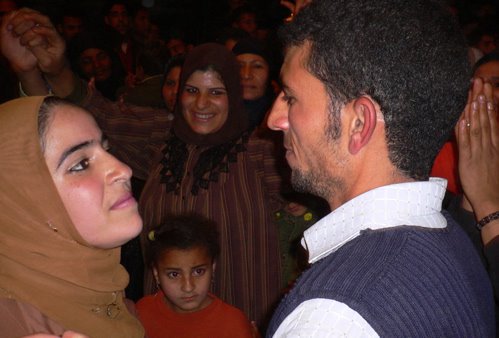
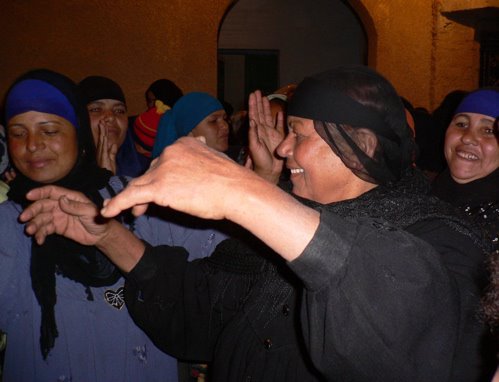
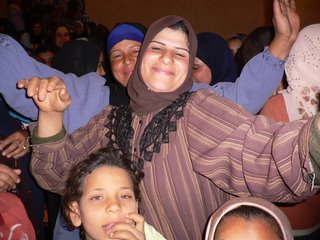
Meanwhile, the festivities going on outside the bride's house while the financial crew works inside are loud and happy, and they span the generations from the grandmothers to the infants. Younger boys and girls crowded around Tracy and I begging to have their pictures taken. I obliged, but tried to point out that Sabrine was the star of the party without a great degree of success. The noise was deafening with music blaring from a DJ's stand outside Sabrine's family home as buses and cars drew up depositing well-wishers from surrounding villages. The women formed a knot around Sabrine where they took turns dancing together. I've seen plenty of belly dancers in hotels over the years but none of them can match the women who dance at family occasions for sheer joy in performance. Inevitably, Tracy and I got pulled into the circle to dance, something that Tracy did much better than I did. I actually took lessons in this sort of dancing many, many years ago, but over the years my knees have suffered greatly and no longer can stand the twists required to do it properly. Sabrine danced for hours that night, the power of the young, and Gaber arrived about halfway through to spend a couple of hours dancing with his bride to be. Perhaps this exercise helps to reduce the natural anxiety of the bride and groom. When I arrived at the party, I made my way through a thickening crowd of young men on the fringes of the women's group.
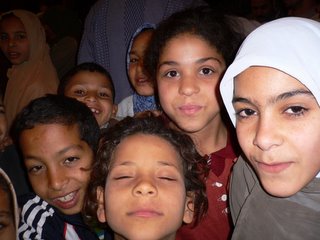
As the evening wore on, this group grew larger and more boisterous in their celebrations with young men dancing together in traditional dances using staffs and rather untraditional dances in which they waved cans of insect spray whose propellent had been lit, providing the boys with mini-blowtorches. Safety is not Egypt's middle name, but happily no one was hurt during the evening. After a couple of hours of the music and dancing, I made my way home, a bit deaf for the time being, but I had clients for riding early the next morning and a lot of preparation to do yet. The next day was the wedding celebration which was held outside of Gaber and Sabrine's new home.

The wedding itself is actually just the signing of the register to show that the bride and groom are married. The ceremony is small, with only a few witnesses, is called "the signing of the book" appropriately, and is usually held in the afternoon, after which the bride goes off to the hair dresser and prepares for the party in the evening. Tracy had arranged for her car to be decorated to carry the bride to her new home, but some workers arrived rather late to install kitchen cabinets at her new house, making us late for the task which fell to one of our neighbours. She and I dashed about getting ready to go and went over to Zawya, Gaber's village, in my jeep.

We found lights strung over an alley in the village and crowds of people standing before a stage on which Sabrine and Gaber were greeting their guests. Most of the grooms in our area were at the wedding, so I wasn't surprised to find some of mine waiting for us to take us to the stage to congratulate the bride and groom. We inched our way through the crowd to the stage where Sabrine greeted us with hugs. The change in her appearance was fairly astonishing. A beautiful girl in her natural state, she had been made up for the video tape that is made for every wedding. Like the old tomb paintings that I've seen all over Egypt, I found a groom with dark skin and a bride who was made up to be much paler. Interesting. Her long hair had been wound up in curls on top of her head and her hands decorated with henna drawings. She was dressed in a long white wedding gown of western design, which I very much suspect was rented for the occasion. A wedding dress is not really a very practical investment for the new wife of a stablehand. Sabrine insisted that Tracy and I join her and Gaber on the stage while people climbed the stairs to congratulate them. There we met members of both families, including the much-feared mother-in-law. Rumour has it that Gaber's mother is a very strong woman and that Sabrine will have some adjusting to do in learning to live downstairs from her. Egyptian mothers-in-law are not known for their love of their sons' wives. I had my problems with my mother-in-law and chats with Egyptian friends assured me that the problems were not necessarily concerned with my being foreign. Egyptian wives also have problems in the same area. To be honest, Gaber's mother didn't really look like someone I would want to cross.

The wedding celebration was a bit of an anticlimax after the henna party. Lasting only a couple of hours, the party broke up with the announcement that the bride and groom would be accompanied to their new home. As she turned to move down the stairs, Sabrine looked at Tracy and I with huge worried eyes and gave us a small smile. We didn't join the crowd escorting the couple to the apartment and went back to our cars. Sabrine had told me earlier that this was a moment that every girl fears as much as she might look forward to it. The day following the wedding, the bloodstained sheet of the marriage bed would be on display to prove that the bride was, in fact, a virgin at her marriage. If for some reason the sheet had no blood, which could conceivably happen even to a virgin bride, there could be serious repercussions including an immediate divorce. Happily, this was not the case for Sabrine, as I heard from her friends later.

Sabrine's life hasn't been easy. She is not from a wealthy family, quite the contrary, and it is large, her father having married three women, although not all at once. She's had pretty much to fend for herself since her father died a few years after her mother, but she's a smart girl who thinks carefully about her choices. Having talked with her a lot about what she was deciding to do in marrying Gaber, I have a lot of respect for her good sense and intelligence. We've seen her through a major step in her life, her wedding, and now since Gaber is working in the same field as I am, with horses, we will be in contact through subsequent events. In all probability we will see her a new mother within a year. I don't plan on losing touch with her because she is a girl who sang as she worked in my home, who loved to play with my dogs and laughed with us at silly Egyptian television shows that we would watch together in the afternoons to help our Arabic. Somehow Tracy and I adopted a daughter and we plan on being there for her. Mabrouk, habibti
Monday, February 20, 2006

Being Given The Bird

BBC NEWS | Middle East | Egypt orders domestic bird cull
It's been an interesting week, to say the least. I had a mare who had to go in for surgery on a check ligament, and since she doesn't approve of riding in trucks or trailers, I had to walk her over to the stud farm where the surgery was going to be done. The day of the surgery one of my parrots lost a foot. How or to whom is still unknown, and as I didn't get home until long after dark in the middle of a rainstorm, I didn't know what had happened until the next morning. The mare is recovering nicely and the parrot is currently inhabiting an indoor cage where she gets a lot of cuddling and almonds while she learns to move around with only one foot. If it had been me, I'd have been a goner long before morning, but parrots are amazingly resilient.

When friends messaged me on the phone that bird flu had been found in Egypt, it was one of those "And what else can happen?" moments. I'll be honest. I haven't decided what to do about my three chickens. They live isolated from people other than myself when I feed the parrots, so I suspect that they are a limited risk to everyone except the parrots who share their cage at this point. Other chickens haven't been so lucky. Most families in the rural areas keep ducks, chickens, geese, and turkeys. Many of these families have been slaughtering their chickens in cooperation with the government edict that states there is a major fine for owning poultry if you are not a poultry farm.

The countryside is dotted with long two and three storey buildings that usually house hundreds of thousands of chickens. These chicken factories, as we call them, supply most of the protein for the people of Egypt. There is no grazing land, so cattle farming isn't really feasible. The Mediterranean is not the healthiest ocean, so fishing isn't going to be able to pick up the slack. Neighbours told me today that a number of these places have culled their entire flocks. They can't sell the birds even if they are completely healthy and they don't want to risk finding the virus among the birds. On one side, the willingness of the people to sacrifice for the greater good is pretty amazing, on the other, I worry about the economic effects on the people. More wealthy Egyptians will simply switch to meat or fish for their protein. The poor do not have that option. There seems to be a local assumption that the virus will go away with the hot weather, but somehow I don't believe so. And what these families will do to help feed themselves is yet to be seen. The market poultry raisers are taking severe blows, since one can be sure that there is no insurance to help to cover the cost of losing all of these chickens.

I understand the wish of governments to safeguard their populations from disease, but somehow it seems to me that part of all the orders to rid Egypt of backyard raising of poultry is the assumption that somehow we humans actually can control our environment. Avian viruses are not something new. They've been here forever, but now humans know how to identify and study them, although obviously we don't know how to control their spread. And they are not going to go away, either. So is the solution simply to ban the existence of birds in households or at least out of doors? Or is it to show people how to keep their birds as free of disease as possible? Can families who depend on being able to raise their own protein in the form of poultry be expected to never have any chickens or ducks again? Even if they killed every bird in Egypt, six months down the line any new birds would still be at risk of disease. There has to be a reasonable solution to this, but I'm certainly not sure what it would be.