Thursday, December 15, 2011
Parliamentary Surprises
People have been voting in Giza the past two days in the parliamentary elections. My neighbours went to a school in Abu Sir to vote as they did in the referendum, but in much larger numbers. My grooms asked for time off to vote and I told them that they absolutely had time off to do so. Later in the afternoon, I sat and we chatted about the voting process. I've read all sorts of comments on the voting results, which seem very much to favour the Islamic parties. So many people find this worrying as they are concerned that the Islamic parties might not be friendly to tourism, might insist on women wearing hijab, might not be friendly to other nationalities and so on. Personally, I feel that this is a momentous new experience for Egyptians and that we really have almost no idea what the results mean to most people. I suspect that we are going to have to just wait and see.
My grooms and gardeners were happy to talk about who they'd voted for and why. When they said that many of them had voted for Salafi's I don't mind saying that I was somewhat surprised. These guys don't seem like Salafi people, really. But when I asked them why the Salafi's or the Brotherhood, their answer surprised me. They pointed out that both parties, having been outlawed during Mubarak's years, had been unable to rack up a history of illegal political activities as had the old NDP. They were, in essence, political novices and as such deserved a chance to try to make things better. I asked about the worries that people have about the Islamic parties affecting our country's main industry, tourism, something that is the basis for our work as well. "Well, if they don't do a good job, then we can vote to get rid of them" was the response. So their votes for the Islamic parties were more a way of avoiding voting for any felool (remnants of the old regime) than they were a vote for the Islamic principles of the parties.
Things in Egypt are seriously not what they seem on the surface.
copyright 2011 Maryanne Stroud Gabbani


Thursday, October 20, 2011
Both Spinning in Space and Standing Still
I have the serious sense of the world moving both too fast and too slowly these days, and to be frank, it makes me a bit dizzy. An unhappy motherboard on my laptop has left me with an iPad that can post but not photos, for the most part, and I won't really be able to intersperse my ideas with some lightening photos. So bear with me.
Where has our Egypt gone? In some ways it is still the same place and in others it has changed almost beyond recognition. Before the revolution the standard line of the government was that they were the only dike between stability and the chaos of Islamic tides. Governments believed this and so did many people. What we've found since the uprising in Jan/Feb has been that the Muslim Brothers, the Salafis, the Sufis, and many other Islamic groups have more than enough internal disputes that no one group is likely to be taking over from the previous government. What we've realized is that this entire propaganda campaign was a diversion from the reality that since the early 1950's Egypt has been a military dictatorship and that this, in fact, hasn't changed. There are many, myself among them, who have a strongly nagging suspicion that the protesters of winter did the military here a huge favour by insisting on the removal of Mubarak and, more importantly, his sons from the picture. There was a lot of debate about the question of whether the very powerful Egyptian army would accept Gamal Mubarak, who never even served in the armed forces, as a successor to his father, and I believe that we have a resounding "No!" as our answer. The military were delighted not to have to force a confrontation and to appear to do the will of the people. They didn't exactly come down that hard on the Mubaraks, allowing Gamal the freedom to come to Cairo from Sharm el Sheikh for months, and allowing Hosny's chief of staff access to the Presidential palace and all its shredding machines for months. After all, maybe the Mubaraks had the wherewithal to perform a resurgence. It's only been in the past few months when it's obvious that the Mubaraks are truly history that the Supreme Council, a ruling group of generals, have taken even half-hearted steps against the previous regime.
Instead, they have adopted the old ways of creating dissonance among Egyptians by ambushing Christian protesters and then claiming in the government controlled media that they were being attacked. This story has only worked among those who only read, listen to or watch only the government controlled media as everyone else has been broadcasting videos and eyewitness accounts of the reality of the situation. Unfortunately one of the aspects of the old Egypt that hasn't changed is the large number of people who do rely on the state media for information, an unsettling thought to say the least. The "government's" inability to handle the issues of seeing Egypt through this period have been publicly on show and privately indicated. The prime minister has attempted to resign many times and has been told, probably very forcefully, that his resignation will, on no account, be accepted. This is likely because the military know that it is the only facade that gives them the slightest shred of legitimacy and they can't afford to lose this. But it seems pretty clear to everyone that the main concern of the military council is the maintenance of their freedom of action without the inconvenience of civilian oversight. They get about $1 billion in military aid yearly from the US and one of their primary concerns is not threatening this lucrative source of income. There has been significantly less concern with reassuring the world that Egypt is still a safe tourism destination (which it is, by the way, unless you are unlucky enough to find yourself in front of a tank...which is an occurrence of very low probability), to look to the reorganization of our schools (which have basically been holding pens for the young and have utterly failed at education), to provide a reasonable standard of living for employees of the state like teachers and doctors (they could share out some of that military largesse?), or to provide any security for the citizens of Egypt who have been living since last January without any traffic or parking police for the most part. It's okay, we can live without the Central Security Forces, who unfortunately seem to have no problem working...usually NOT for us.
One of the things that has changed is the willingness to discuss our situation among people in general, and this is definitely a Good Thing. You hear discussions and arguments over current events in Egypt everywhere now, whereas before January they were generally carried out in low voices in closed rooms among close friends. As an Arabic speaking foreigner, I can hardly buy a coffee without discussing something. People are now willing to talk about, and go on strike for, things that they have long been vexed by. While the strikes are truly inconvenient for most of us (though we saw a nice decrease in traffic during the transit strike...no buses and fewer minibuses) it's totally understandable. Everyone was gagged for so many years with repression and the inability to speak out. The Maspero incident in which the army attacked the the Christian AND Muslim protesters left real scars and worried Christians here in Egypt. Rumours abounded immediately afterwards about army checkpoints that were stopping cars and rounding up Copts. I've found no confirmation of them, but the damage that they do to the national psyche is obvious. Out here in the villages, religion is still not an issue and we have Copts and Muslims living and working side by side. The idea of conflict over this is still considered ludicrous.
The list of things that haven't changed, however, is staggering. Whatever is passing for an Egyptian government is still almost utterly disengaged from the concerns and needs of the people. Election dates are postponed and changed at random, procedures for elections are totally unclear and are changed at random. This is enormously confusing and is leading to a real sense that nothing really has happened to change the essence of the Egyptian government. The schools have been a cause for serious concern for years, with crowded classrooms taught by untrained teachers who rely on rote learning turning out citizens with only rudimentary skills at the basics and virtually no ability to analyze a situation and make an informed decision. Essentially, they've been factories for an ignorant and compliant populace.
An additional serious problem that I have only really become aware of in the past 6 months is the issue of the education of families in maternal, prenatal, and postnatal nutrition. My housekeeper had a baby and returned to work after two weeks bringing the baby with her. While this may seem way too early, it's worth noting that she probably works much less in my home than in her own, she has a number of adults available to help with care for her son, and she has decent food here. I've had meals with farm families and noticed that the men generally eat first, with the children next and the women last. These means that women who are pregnant and nursing don't necessarily get the nutrition they need. Magda has had more children that she needs (let's not even open the topic of her husband who doesn't help to support the family and stands in the way of birth control in a really secure fashion.) Now she's on pills having tried a number of other unsuccessful forms of birth control but she has always been too tired and improperly fed to be able to nurse her babies properly. When this last son was born, I began buying the formula to supplement as one can is about 40 LE. To feed this child properly would take over half her monthly income...and she has more kids at home to feed. So basically we have taken on the job of feeding this baby, who is now beginning to eat and gets homemade baby food while he is here almost every day. I've begun noticing the other infants around me and most of them are small, thin, rather unresponsive, the victims of postnatal malnutrition. Their mothers are often exhausted working hard around the house...housework in the villages is no joke. Food is prepared absolutely from scratch, keeping a house clean next to the desert is a full time job, and there is little time to put one's feet up. Additionally there is almost no knowledge of proper nutrition or even the need of a nursing mother to drink sufficient fluids. We find ourselves raising children here who due to improper nutrition have a bad start in life and then compound it with the schools. While I'm definitely not an advocate of cradle to grave imposition of lifestyle, it is absolutely the role of government to provide education to its population whether children or adults. The government here really hasn't tried much.
One of the senses that many of us have these days is the sense of there being simply so much to do to put Egypt to rights. How is this going to be done? Will we get a government that responds to the needs of the people? Will we just get another one that milks the country for wealth? Every question is still in the air.
copyright 2011 Maryanne Stroud Gabbani
Sunday, July 24, 2011
A Hard Lesson
Living in a country during a revolution changes you whether you like or expect it or not. One of the changes that I've seen in myself is the extent to which I am interested in social and political trends in Egypt and other parts of the world. Sure, I was interested in them before to a certain extent but that interest has been honed and given new tools since the revolution. Before revolution I prided myself on the fact that I read the news from a wide variety of sources, having come to the conclusion fairly early in my life, around the time of the Viet Nam war, that no one source could be trusted implicitly. During January and February, I promised my kids to stay safe on the farm so I picked up a Twitter account that I'd opened in curiosity a year or so earlier and decided to see how it worked.

And did it ever work! From a few friends that I knew through blogging I gradually expanded my circle of informants to most of the activists tweeting in English, and from there to the frontline journalists who actually went out into the field to report on events in Egypt. Gradually the list expanded to include journalists and activists throughout the Middle East, North Africa, other parts of Africa and lately into Europe. Activists talk about what they want to do, plan to do, hope to do, and about what went wrong or right with what they've already done. It's quite enlightening and humanising to listen to their worries, fears, and dreams. The journalists tend to post a link to an article as it's published so I get a jump start on reading rather than waiting for a wire service or newspaper to pick up the article. They also post links to many of the more obscure but incredibly interesting and useful blogs, reviews, and online papers. Additionally, once you collect a reasonable amount of journalists on your Twitter feed, you get to eavesdrop on their debates, discussions and jokes that never, ever make it to a written page. This is both enlightening and highly entertaining.

On Friday evening I opened Twitter to find references to Norway's catastrophe and immediately turned on Al Jazeera English. This is my first choice for the news, again a change since the revolution when we saw here the amount of time and investment of interest and personnel that they put into their coverage of events in Egypt. Additionally, their lack of advertising is a huge comfort. This time, however, I was appalled to see them interviewing one Justin Crump, apparently some kind of security analyst from the UK, about his ideas about the bombing in Oslo. The horrific details of the shooting on the island had not come out on the news yet. Despite the interviewer's insertion of "but, but", Mr Crump quite comfortably declared that this was likely an Al Qaeda action or the action of some other Muslim terrorist, and proceeded to list all the reasons that this might be so. Disgusted to see this yet again (the broadcasts of 9/11 will live in my memory forever with their seamless condemnation of the Arab perpretrators...something that totally astonished me at the time), I turned to Twitter. There was discussion as to who might have been involved in the action and, as journalists contacted friends in Norway, suggestions of people to follow on Twitter who were in place as witnesses or who had immediate access to the ongoing investigations. I followed the breaking news and discussions avidly through the evening.
At one point, a security analyst who specialises in following the jihadist bulletin boards online tweeted that someone on one board had claimed the bombing for the Friends of the Islamic Jihad, a group that no one had ever heard of. Subsequent tweets mentioned that the claimant was not the best of sources and suggested caution, but caution was not on the agenda of the New York Times and later the BBC, who quoted the New York Times as a source. They came out with the news that it was the work of Arab terrorists and many people followed their stories as the gospel...I mean, after all, the BBC AND the New York Times couldn't be wrong? Could they ever be! Yesterday there was a day long discussion on Twitter as to whether Will McCant, the source for the bulletin board tweet was irresponsible in tweeting his information if idiots were going to pick up the information and run with it as the Word of the Almighty. I don't know that anyone ever came to any conclusions in the discussion other than the fact that no one liked what had happened and everyone was uncomfortable with the fact that once again, the ubiquitous "Arab terrorist" was going to be blamed for something, causing innumerable problems for any of us connected with the Middle East. My personal opinion is that the problem was caused by the general assumption that something seen on Twitter, or the internet in general, is by definition true, an assumption that is utterly wrong. Twitter posts and internet posts are not necessarily fact-checked or verified. They are opinion, information that could be either right or wrong, that is passed on, and they must, as such, be subject to fact-checking and verification. This did not happen on Friday night.

When the Norwegian police announced that the gunman who had been massacring young people at a political summer camp on an island near Oslo and who appeared to be responsible for the car bombing of the building in downtown Oslo was most definitely Norwegian, some of the speculation by news papers online changed to whether or not he had been trained by Muslim terrorists, not much of an improvement by my standards, and on Saturday morning many news sites still had not changed their stances in the face of the facts. The reaction by the mainstream media (often abreviated to MSM on Twitter) to the events of Friday was, on the whole, fairly ghastly. An article in The Atlantic has a very good discussion of the sudden about face that the media had to make in the light of the fact that this was in fact the act of a homegrown right wing Christian xenophobic Norwegian terrorist.
Interestingly enough, the fact that he was a Christian Norwegian suddenly seemed to change the man from a terrorist (something that is foreign, fearful and incomprehensible) to a madman (which somehow is understandable). I don't find it understandable at all myself. There is some level of derangement in anyone who can comfortably contemplate the destruction of other people to "enlighten" others or to change history. But then the natural progression of my logic is that the sanity of most military organisations is called into question and I'm sure that many people really don't want to go there. But I would most certainly state that this individual is definitely a terrorist and, in terrorism terms, a very successful one at that. Considering the difference in population between the US and Norway, he managed to kill a larger percentage of Norway's people in his bombing and shooting than the percentage killed in the attacks of 9/11. And he seems to hold the record for the most number of people killed single handedly in a single incident.
I'm hoping (ever the optimist!) that there is a lesson learned from the past two days. One would imagine that the Oklahoma City bombing would have clued in the US that they have to watch their local non-Muslim terrorists, although the main change seemed to have been a toughening of policy against foreigners. Europe has definite issues with governments banning the wearing of niqab and taking action against halal and kosher slaughter. A Dutch friend of mine told me that this was initiated as an animal welfare bill that called for the anaesthetising of animals before slaughter so that they wouldn't be in any pain. My understanding of anaesthetics and euthanasia of animals is that drugs are prohibited in animals used for food for a very good reason, the fact that the residues are harmful to humans, so I have to first question the logic of the initial push and then wonder why it became ethnic/religious.
My thoughts and prayers are with the families in Norway who were devastated by the past few days, but I also pray to see some understanding in the world that xenophobia and extremism breed terrorists, and that terrorists come from any and every background.
2011 Maryanne Stroud Gabbani

And did it ever work! From a few friends that I knew through blogging I gradually expanded my circle of informants to most of the activists tweeting in English, and from there to the frontline journalists who actually went out into the field to report on events in Egypt. Gradually the list expanded to include journalists and activists throughout the Middle East, North Africa, other parts of Africa and lately into Europe. Activists talk about what they want to do, plan to do, hope to do, and about what went wrong or right with what they've already done. It's quite enlightening and humanising to listen to their worries, fears, and dreams. The journalists tend to post a link to an article as it's published so I get a jump start on reading rather than waiting for a wire service or newspaper to pick up the article. They also post links to many of the more obscure but incredibly interesting and useful blogs, reviews, and online papers. Additionally, once you collect a reasonable amount of journalists on your Twitter feed, you get to eavesdrop on their debates, discussions and jokes that never, ever make it to a written page. This is both enlightening and highly entertaining.
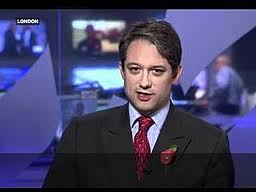
On Friday evening I opened Twitter to find references to Norway's catastrophe and immediately turned on Al Jazeera English. This is my first choice for the news, again a change since the revolution when we saw here the amount of time and investment of interest and personnel that they put into their coverage of events in Egypt. Additionally, their lack of advertising is a huge comfort. This time, however, I was appalled to see them interviewing one Justin Crump, apparently some kind of security analyst from the UK, about his ideas about the bombing in Oslo. The horrific details of the shooting on the island had not come out on the news yet. Despite the interviewer's insertion of "but, but", Mr Crump quite comfortably declared that this was likely an Al Qaeda action or the action of some other Muslim terrorist, and proceeded to list all the reasons that this might be so. Disgusted to see this yet again (the broadcasts of 9/11 will live in my memory forever with their seamless condemnation of the Arab perpretrators...something that totally astonished me at the time), I turned to Twitter. There was discussion as to who might have been involved in the action and, as journalists contacted friends in Norway, suggestions of people to follow on Twitter who were in place as witnesses or who had immediate access to the ongoing investigations. I followed the breaking news and discussions avidly through the evening.
At one point, a security analyst who specialises in following the jihadist bulletin boards online tweeted that someone on one board had claimed the bombing for the Friends of the Islamic Jihad, a group that no one had ever heard of. Subsequent tweets mentioned that the claimant was not the best of sources and suggested caution, but caution was not on the agenda of the New York Times and later the BBC, who quoted the New York Times as a source. They came out with the news that it was the work of Arab terrorists and many people followed their stories as the gospel...I mean, after all, the BBC AND the New York Times couldn't be wrong? Could they ever be! Yesterday there was a day long discussion on Twitter as to whether Will McCant, the source for the bulletin board tweet was irresponsible in tweeting his information if idiots were going to pick up the information and run with it as the Word of the Almighty. I don't know that anyone ever came to any conclusions in the discussion other than the fact that no one liked what had happened and everyone was uncomfortable with the fact that once again, the ubiquitous "Arab terrorist" was going to be blamed for something, causing innumerable problems for any of us connected with the Middle East. My personal opinion is that the problem was caused by the general assumption that something seen on Twitter, or the internet in general, is by definition true, an assumption that is utterly wrong. Twitter posts and internet posts are not necessarily fact-checked or verified. They are opinion, information that could be either right or wrong, that is passed on, and they must, as such, be subject to fact-checking and verification. This did not happen on Friday night.
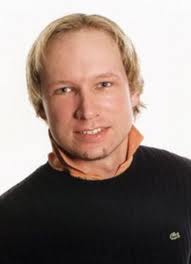
When the Norwegian police announced that the gunman who had been massacring young people at a political summer camp on an island near Oslo and who appeared to be responsible for the car bombing of the building in downtown Oslo was most definitely Norwegian, some of the speculation by news papers online changed to whether or not he had been trained by Muslim terrorists, not much of an improvement by my standards, and on Saturday morning many news sites still had not changed their stances in the face of the facts. The reaction by the mainstream media (often abreviated to MSM on Twitter) to the events of Friday was, on the whole, fairly ghastly. An article in The Atlantic has a very good discussion of the sudden about face that the media had to make in the light of the fact that this was in fact the act of a homegrown right wing Christian xenophobic Norwegian terrorist.
Interestingly enough, the fact that he was a Christian Norwegian suddenly seemed to change the man from a terrorist (something that is foreign, fearful and incomprehensible) to a madman (which somehow is understandable). I don't find it understandable at all myself. There is some level of derangement in anyone who can comfortably contemplate the destruction of other people to "enlighten" others or to change history. But then the natural progression of my logic is that the sanity of most military organisations is called into question and I'm sure that many people really don't want to go there. But I would most certainly state that this individual is definitely a terrorist and, in terrorism terms, a very successful one at that. Considering the difference in population between the US and Norway, he managed to kill a larger percentage of Norway's people in his bombing and shooting than the percentage killed in the attacks of 9/11. And he seems to hold the record for the most number of people killed single handedly in a single incident.
I'm hoping (ever the optimist!) that there is a lesson learned from the past two days. One would imagine that the Oklahoma City bombing would have clued in the US that they have to watch their local non-Muslim terrorists, although the main change seemed to have been a toughening of policy against foreigners. Europe has definite issues with governments banning the wearing of niqab and taking action against halal and kosher slaughter. A Dutch friend of mine told me that this was initiated as an animal welfare bill that called for the anaesthetising of animals before slaughter so that they wouldn't be in any pain. My understanding of anaesthetics and euthanasia of animals is that drugs are prohibited in animals used for food for a very good reason, the fact that the residues are harmful to humans, so I have to first question the logic of the initial push and then wonder why it became ethnic/religious.
My thoughts and prayers are with the families in Norway who were devastated by the past few days, but I also pray to see some understanding in the world that xenophobia and extremism breed terrorists, and that terrorists come from any and every background.
2011 Maryanne Stroud Gabbani
Friday, May 27, 2011
Love And Hope Spring Eternal
I've been writing this blog for about eight years now and right from Day One I've been getting emails, mostly from women, about moving to Egypt to pursue a relationship with someone. Many of these inquiries stem from holiday romances, some from people met at univerisity abroad, some from internet romances that someone wants to pursue. Our revolution hasn't changed the incoming traffic one bit, other than my correspondents report even more nervousness from their friends and relatives who worry that a move to Egypt will automatically end in disaster. I finally decided that it was time to put out a list of things to think about before marrying into Egypt.
I spent 25 very interesting years married to an Egyptian man whom I met in Canada while in grad school. We married and had our kids in Canada but we were visiting Egypt very regularly before we moved to Egypt. Some years while the kids were still very young, I spent a month or two staying with my in-laws while my husband would travel back and forth between Cairo, Khartoum and Toronto. When I finally moved to Egypt, I'd been visiting it since 1976 and had spent a fair bit of time exploring and learning my rudimentary Arabic. I had decided that I loved Egypt's chaos, its happy loopiness and randomness, and it was actually my idea to move here against all of my husband's objections. We had a good life, our children had a varied and rich childhood, and while there were some ups and downs, I wouldn't have missed a minute. I did NOT move here cold without having visited quite a bit, nor without knowing some Arabic (enough to do daily tasks fairly independent), and I knew (or at least thought that I did) my husband's family quite well. In other words, I probably made the transition from Canada to Egypt under the best of circumstances. I'm not sure that most other people will be so blessed. So here is my open letter:
Dear Whoever is thinking of moving to Egypt for a partner,
I really should have a sort of form letter for this because I don't know how many emails I've sent to people who are thinking of following a friend to Egypt. First, the reality of life here is not seen anywhere in the western media. Life here is nothing like what they show on the news or in magazines. It is not especially dangerous, but it is not a life for someone who is unaware of his/her surroundings. Tell all your friends and relatives that you are not moving to the moon or to the 2nd circle of hell. That said, there are some serious questions that you need to ask and answer for yourself before making any kind of permanent or even semi-permanent commitments to a life here.
1. Do you like living in Egypt? Is this a country that fits well with your lifestyle and personality?
This must be decided for you and you alone. Life is impermanent and people come and go in it. So if you think about living in Egypt, it's important to know that you would like living here with or without your partner. I suggest coming on a visit to see if you can cope with the life in Egypt, whether it is in the pollution, crowding, and excitement of Cairo or in the much slower life of the villages or smaller cities. Don't just visit the pyramids and museums. Go everywhere. Check out shopping centers and souqs. Talk to other people living here. Go grocery shopping. Try cooking. Look for a job ...if only to see if you would be happy working here.
2. Are you willing to learn Arabic?
It is possible in some places to live in Egypt without knowing Arabic, but to be honest, you will be missing out on most of the life here if you can't simply carry on a conversation with the people around you. Even a simple task like grocery shopping can be much more effective and interesting if you can ask what new foods are and how to prepare them. Getting lost is less of an issue and Surprise! many of the things that people say around you are not cause for concern. Written Arabic and spoken Arabic are almost different languages, but there are many language schools here in Egypt and abroad that will help you to learn the language.
3. Do you know what you are getting into? Relationships are complicated and more so across cultures.
If you are considering an alliance with an Egyptian partner, you need to meet his/her family. You never marry a person, no matter where you live, you always marry his/her family and their history. This is true of marriage within your culture and religion and even more true if you are moving outside of your culture or religion. Your partner's unconscious assumptions about the role of wife and mother or husband and father are determined largely by what existed within his/her family, just as yours have, and it's a very good idea to meet the role models, to say the least. As well, although it is totall unPC to say anything about social class or anything like that, if your family backgrounds are too different, the adjustment can be very difficult. With a new geography, new culture, and new language, why make things harder than necessary? The more you know, the better you are prepared.
4. Do you realise that every country has a different family law? What you are accustomed to is not necessarily what is going to be what you have to deal with here.
Learn about family law in Egypt and get a good lawyer to explain and protect your rights if you choose to marry and live within Egypt. Egyptian family law is currently closely tied to the family's religion and this must be understood and taken into account. As we are currently in the process of reworking the constitution and government (hopefully), much of this is still unclear, but most definitely the family law that you are used to wherever you live now is nothing like the family law in Egypt. Family law is the law that determines marriage, divorce and child custody. For example, a woman's rights to divorce and other things can be specified in her marriage contract...a legal document that is the basis of every Muslim marriage, while divorce is forbidden by the Coptic church. Inheritance is so complex under Islamic law, which will be applied to a Muslim family no matter what anyone might wish otherwise, that it almost is a course of study on its own.
These are the main points. You need to see for yourself. That's the main thing. Egypt is safe to visit, so you should. Think carefully and do what is best for you.
Wishing you all the best,
Maryanne
copyright 2011 Maryanne Stroud Gabbani
Tuesday, May 24, 2011
The Wrong People In the Wrong Place
Yesterday about 350 bloggers in Egypt wrote posts regarding the role of the Supreme Council of the Armed Forces. (As a personal aside, I find this propensity for supreme councils to be a bit burdensome...couldn't they have an easier name? Somehow SCAF actually does work better as a name.) Most of these posts were in Arabic, but some were in English, which meant that I could read them. I really wish I'd learned to read Arabic, but at my age, time is a bit short to reach a real level of competency.

Most of the posts were, quite naturally considering the state of affairs in Egypt, not exactly pro-military rule. Everyone is upset over the arbitrary detentions and the fact that frankly nothing much is working properly. It's true that nothing much is working properly, and I believe that the fact that our undear and barely departed fearless leader entrusted the country to the SCAF has a great deal to do with our current problems. One post, written by the son of a military man, points out that the army simply isn't equipped for the job. "And here comes the problem, the army / SCAF may be great at doing their job "protecting the people" but they're certainly not knowledgeable, trained, experienced or ready to do a totally different job: "Leading a country of 85 million people in a pivotal point of its history". It doesn't mean they're bad people, it doesn't mean they're on the "dark side of the force", it's just that you're asking a mechanic to remove your tonsils. Those inflamed, complicated, infected tonsils that have been part of your body for years and that you have to remove now, with a great deal of surgical precision." But we were left with the mechanics to remove our tonsils and to treat our cancers. Not wonderful.

This post hit home to me, being a balanced consideration both of what the SCAF was doing wrong and also a consideration of why this might be happening. I do believe that the top ranks of the military (unfortunately those who do make up SCAF) are part and parcel of the old regime. They make outrageous salaries, have incredible perks, and are basically accustomed to being immune to the normal problems of Egyptian life, living in their bubble world, much like the wealthy businessmen who did so well as long as they could call on the influence of friends in government.

It's worth looking at what the military in Egypt actually do. This is a huge institution that ingests vast quantities of poorly educated young men each year for a two year stint of work and, for much of them, deprivation. I live between two main Army bases, Beni Yusuf and Dahshur, and my farming neighbours and my staff have plenty of stories of their time spent in the military, stories of terrible food, long work hours at tedious jobs of maintenance or sometimes working at the homes or farms of the military commanders. We've all seen groups of conscripts doing basic construction work along roads or such things. One of my neighbours (someone who's moved out of his fancy house at this point) was an officer in the police and used his recruits as drivers, gardeners, handymen and general lift-and-haul personnel at his home. This didn't raise a single eyebrow anywhere as it was standard for someone of his rank. So basically, the largest portion of the army consists of poorly educated conscripts who are enrolled in a two year course of indentured servitude....they may be learning to be soldiers, perhaps will be taught the rudiments (never more than the rudiments) of driving a truck or car, some mechanical skills, or perhaps will simply water a lawn somewhere. The better educated members of society generally get assigned to higher ranks on conscription and can either do a desk job or with the right kind of connections, avoid the entire experience all together. Then you have the lifers who have gone to the military college and dived into the the military pool with the hopes of surfacing as a brigadier general someday. These people have almost nothing in common with the conscripts. When the tank commanders did not fire on the protesters in Tahrir during the revolution, this was the work of the conscripted officers. These were men who were doing their two year obligation and when looking at the protesters could think "There, but for the grace of God, go I". They knew that when their time in the military was up, they could easily be those same protesters. This could never be said of the higher ranks. They are bosses and will always be bosses....at least they hope so.
But what does this huge institution actually DO? Well, it hasn't fought in a war since 1973, so that isn't its job at this point. Theoretically, its job is to be ready to fight in a war and this is the rationale for the massive military aid that the armed forces receive from the US, to use an example. I've known some of the military personnel who have come to do training with the Egyptian military, and without exception, their advice to me has always been "just hope that you never need them". A helicopter pilot noted that his students would do anything to avoid flying...a troubling habit as a pilot relies on practice to be able to do his job. If pilots of any kind don't fly for practice, when they need to do so under stress they are unlikely to be of much use. An engine mechanic had the same sort of comment...so it would appear that the zest for military work in the middle to lower management range is somewhat lacking. But there also seems to be little concern about this from the upper echelons. Perhaps they are concentrating on something else?
As a semi-outsider I have noticed an interesting pattern in the Egyptian business community in that virtually every company of any size had some sort of general or something attached to it. So the military is a business school? I wouldn't call it that as many of these individuals were there for their connections to the old regime rather than for their abilities to actually do anything. Those that I met were, on the whole, extremely rigid, not likely to consider any new practices or ideas, and tended to be happy to work in strict chain-of-command situations. When pushed to release information, or change a business paradigm, or learn something new, they were often shocked into immobility. The military, however, have extensive business enterprises. They do a lot of construction work, they own and run hospitals that, while they are meant for military personnel, are actually used for private patients, and the number of entertainment and vacation properties that are run by and for the military is rather staggering. The Egyptian military have an extraordinary number of business enterprises that go back to an initial concept that the military should be self-supporting, but now go quite beyond that.
But does all of this economic activity make them qualified to run a country? On the contrary, their interests mean that they are more concerned with protecting themselves from any interference from outside the military than they are in integrating with the rest of society. It's known that any system soon aligns itself with whatever it takes to preserve that system...no matter what the pronounced goals of any system might be said to be. Would I be surprised if it somehow is "difficult" or "inconvenient" to hold elections that might see civilian oversight of the military? Absolutely not. Their slowness to deal with old problems, and they are almost without number at this point, is hard not to notice. Out near where I live, farmers are wondering about planting and selling crops in the coming seasons as there used to be some guidance from the ministry of agriculture, guidance that is entirely lacking at this point. They don't know how the market is going to work, whether the government will pay a certain price for needed crops as in the past, or what to expect from life in general. As a result the prices of many agricultural products are rising as the farmers are hesitant to sell something that they might need for themselves. Our Egyptian farmers are wildly underrated, but I've seen them to be industrious, canny individuals who know how to coax the maximum number of food crops out of the valley's soil. They do, however, need some input from the ministry of agriculture and this doesn't seem to be forthcoming.
At this point the SCAF are in the unenviable position of being criticised quite correctly for their mishandling of the daily security issues, their inability to get ordinary police back to work, their detention and abuse of protesters, the lack of information and preparation for democratic elections, the lack of effort on the part of the ministries to assist businesses or the farmers. They were given a job that they were not prepared to do, and that many argue they had no real intention of actually doing properly. If, in fact, they have been working with honorable intentions, perhaps they should be asking for some help to accomplish this task. At the very least, they could arrange that the "bad guys" of the old regime are not appointed to current positions of power. The current policies do leave everyone asking whether they can be trusted to help to run honest elections if and when they decide that they will occur.
copyright 2011 Maryanne Stroud Gabbani
Sunday, May 08, 2011
Appalling Manipulation
Last night a group of Salafists came to a church in Imababa looking for a Muslim woman called Abeer who was supposedly being held in the church. Oddly enough, this event occurred very shortly after a television program was broadcast during which a woman called Kamilia Shehata spoke denying that she had changed her faith from Islam to Christianity. Kamilia had been a rallying point for months for Salafists who claimed that she had been kidnapped and forced to convert to Christianity. During the television program Kamelia Shehata announced that she had not converted to Christianity and apologised to everyone for the problems caused. Zeinobia in her blog Chronicles of Egypt provides a timeline and some analysis of this bizarre event, the subsequent attack on an Imbaba church.
I was following the initial reports of the events in Imbaba before I went to bed last night and I turned in thinking that while it looked unpleasant, probably things would be ok in the morning. I couldn't have been more wrong. This morning when I sleepily booted up the laptop and checked Twitter I found that the situation had escalated to a major incident in which over 200 people were injured, about 8 were killed, and almost 200 people were finally arrested. We don't need this and I have to wonder just why this is happening now. I've done a bit of research online to learn more about the Salafis as to be honest I hadn't heard of these people before about March. I can abbreviate some of the considerable information in a couple of places such as Wikipedia and a blog called The Middle Ground. I plan to read more over the next few days.
Salafis are basically to the right of the Wahhabis, the ultra-strict sect of Islam practiced by the ruling family of Saudi Arabia, although according to other sources, they are supposed to be less strict than the Wahhabis. They disapprove of the Wahhabis as being much too liberal and not adhering to a sufficiently strict version of Islam, being a seriously strict fundamentalist group themselves, while according to the other sources previoiusly noted, the Wahhabis feel much the same about the Salafis. Many of the Egyptian Salafis found themselves locked up by the Mubarak regime for involvement in various outlawed Islamic organisations. Quite a few of them were released during the revolution, and the exact fashion in which they were released is in question to a large degree. Since the end of the revolution the Salafis have been identified as being responsible for the destruction of or damage to a number of Sufi tombs and shrines, claiming that they are idolatrous. Sufis are roughly the other wing of Islam and are primarily known for their belief in a personal relationship with God and being fairly relaxed on a social level. Islam is a huge and complicated religion with as many schools of belief as there are versions of Christianity.
Like many people here, however, I find issues of timing and the types of confrontations to be puzzling and suggestive. There aren't that many Salafis in Egypt, but they are taking up a rather large portion of the news coverage (which is still strongly influenced by the old regime) and they are seriously aggressive on many occasions. I can't recall any previous "Salafist" events at all, so this is a change that has happened after the military council took power when Mubarak stepped down. The non-issue of Kamilia Shehata, whose interview was broadcast on a Christian television channel, has been allowed to be blown out of all proportion. I find it fascinating that the mysterious Abeer should suddenly appear as a new "victim" at just the moment Kamilia Shehata retired. Almost as if they needed a new cause to justify their trouble making. And what are they accomplishing with all this? The main thing is to keep everyone off balance and create or magnify sectarian issues. And who would benefit from this action? The only people I can see benefiting from the discord within Egyptian society would be the military, since they have ruled Egypt since the change from a monarchy in the 1950's, and I'm very sure that they are not all that thrilled at the prospect of answering to the public, which could become the situation if there really are free elections in the fall. They plead inexperience in ruling the country, but the fact is the military, in the persons of Nasser, Sadat, and Mubarak, have been ruling Egypt for about seventy years. One of the main problems facing the revolution is the fact that much really has not changed in the running of the country. As I was writing this post, Al Jazeera covered a story from Tunis that noted that Tunisians are extremely worried that the military might take control of the country should an Islamist group win in elections. Gee, that rings a bit of a bell for me at least.
None of us are really clear what happened last night although there are a few eyewitness reports. Sarah Carr, who spent quite a lot of time in Tahrir and is well-acquainted with Egypt's security service staff noted the presence of quite a few on the scene...and they did not seem to be concerned with calming the situation down. There are also other blog posts that acknowledge the lack of personal information but stress the importance of looking at the issues closely to remedy the problems. There have indeed been stressful relationships between Christians and Muslims in Egypt, although it is quite questionable as to what extent these were manufactured or exacerbated by the Mubarak regime. I was pleased to note that a multicultural multireligious event will be held next week in Maadi despite today's events. I'm sure that it's been planned for ages, but they could decide to postpone or simply forget about it.
People often wonder why people in the Middle East seem to be prone to conspiracy theories. If we have learned anything from the revolution this year, it is probably the fact that little here is as it seems. We are well aware that previous regimes have found it easier to run Egypt if the Egyptians are not unified as one people as they were during the revolution, and I suspect that the military council would also find this to be true. I'm quite sure that the army and what is supposed to be national security could protect churches against Salafist groups if they really wanted to. But do they?
copyright 2011 Maryanne Stroud Gabbani
Sunday, April 24, 2011
Goodnight, Ali

I lost an old friend today. Ali, also known as Ali Capone, Alibird, and AliDon'tBiteMyFeet, was found dead in the aviary today. There was no indication of attack, illness or anything to suggest why he would have died. I have to assume a coronary or something. He was about 22 years old, a fairly respectable age for an African Grey parrot. We don't know exactly how old he was but he was a fairly young bird when he came to live with us.
My kids bought Ali for me for Mother's Day when we were living in Alexandria. He was young, frightened, and not at all happy with human beings. I put his cage in the kitchen so that he would see people all the time. We put a bowl of treats (nuts, grapes, and so on) next to the cage. Every time someone came through the kitchen they would take a treat from the bowl and offer it to Ali, usually saying as people do "Here, Ali". Gradually he calmed down among us and got to look forward to the attention. It took months before I was able to touch him without significant blood loss, but in a year or so he would come out of his cage and wander around the house on the floor quite comfortably. African Greys are well known for their speaking ability and Ali was very vocal. With people talking to him all the time and giving him goodies, he began with whistling. When we copied his whistles, it became a game where he would copy any whistle he heard. Soon he began muttering. It was extraordinary to hear long conversations from this little grey bird, but the meaning was just out of reach. Without really thinking, you found yourself hearing this voice coming from the cage and saying "What?". We felt silly responding to a parrot like that but he sounded so real. Then one day in the midst of the mutter a word came out clearly: "What?". Well, of course. The next word he said was "Here", another natural since that was what people said to him when they gave him treats.

When we moved to Cairo from Alexandria, Ali came with us and he really came into his own in the new house. By now he was used to being loose in the house much of the day and sleeping in his cage at night. He had a nice perch on the top of his sleeping cage and when I came down to the kitchen I would hear a quiet "Hello Ali" from under the covers. If I didn't take them off and open the door, the greeting would come with greater volume and urgency until I finally did. During the day if I was cooking in the kitchen he would wander around the kitchen floor, pulling on cupboard doors trying to get them open and murmuring "What here Ali?" to himself. His vocabulary was increasing and his use of it was more skilled. He would encourage himself in his activities by saying "Come on Ali", and would be totally delighted if he got the cupboard doors open. He loved to pull all the pots and pans out of the cupboard. The sound of them banging on the floor seemed to give him enormous pleasure. He would follow me out to the living room and climb up my leg to sit on my lap while I read, or cuddle up under my chin when I took a nap on the sofa. Every now and then he would say something so direct, real, and off the wall that it would astonish me. One day when my daughter came home from school to find me making spaghetti sauce in the kitchen. She wandered in asking me what smelled so good. A little voice came from the cage saying "What's it look like, stupid?" We were both dumbstruck and looked over to Ali who merely scratched his head and looked innocent.

Ali didn't like the kitchen cupboards in our next house. They were too heavy for him to pull open, so he turned his talents to other occupations like removing the rubber seal of the refrigerator....like about three times. Expensive hobby. He also proved himself to be incredibly efficient at stripping the toaster cord of its covering while it was still plugged in, and we decided that maybe Ali needed a safer place to live. We built an aviary in the garden and found him a nice African Grey girlfriend Mona to share it with him. He liked the arrangement and after a couple of years he and Mona surprised us with two baby African Greys. They were great parents and took good care of the babies, but when they were fledged we moved the kids into the house to work with them so that they would be comfortable with humans. We didn't think that keeping four Greys was such a good idea. The babies, Pobble and Atilla the Hungry, were female and male respectively, and were so much fun to train. They were being hand fed so we took them with us to our house in Sharm el Sheikh that summer and had to clip their wings when they learned to fly in the living room. We found homes for them with good families. Pobble took after her father and was a real talker but Atilla was like his mother Mona and specialised in whistles.
While the years were passing, we collected other birds in the aviary. At various times we had African Ringnecks (the infamous Killer Kelly and her motorcycle gang) and some Cuban Amazons that I found sick and miserable at a bird seller. A friend brought me a really unhappy Grey who had pulled out all his feathers, but Fritzi recovered well in the company of Ali and Mona. When I finally moved from Maadi to Sakkara, I built a big aviary for the birds so that they would have plenty of room to fly in. Brilliantly, I thought that I might be able to use chicken wire to screen in the rooms inside (three 3 metre x 3 metre rooms joined by a small service room) but Ali, Fritzi and Mona had other ideas. They chewed through the chicken wire to make holes so that they could fly from one room to the other. Life was getting interesting. I bought some chickens to clean up the food that the parrots loved to toss on to the floor, then someone brought us a couple of ducks, a pair of turkeys, a couple of geese, some doves and pigeons and we had a major avian habitat going on.

You might think that a duck, goose or turkey could bully a half pound parrot but that is definitely not the case. Ali and Fritz took over monitoring the terracotta jar where the chickens liked to lay their eggs and we had to coax them away from it to collect them. There was no question....ever....who ran the aviary. Every morning when I'd go out to feed him, I'd hear a cheery "Hello Bird". As far as Ali was concerned we were all birds. If I was late with breakfast the calls of "Here Ali" "Here Bird" would increase with time. And everyone loved playing the whistling game with him. He would copy your whistle and embellish it a little with a sort of competitive streak. He drove the gardeners crazy when they cleaned the aviary because he would waddle along behind them and nip at their feet. They never would wear closed shoes for that work. I knew better.
There is great disturbance in the birdosphere today. A wonderful little grey creature is sleeping under the papaya tree and I will miss him forever. Goodnight, Ali Bird.
copyright 2011 Maryanne Stroud Gabbani
Subscribe to:
Posts (Atom)